







 HR & Safety Software
  ISO Training Academy
  foundU Client Login
Blogs
Brittany Byrne named finalist in the 2026 Lawyers Weekly Women in Law Awards
Brittany Byrne recognised as a finalist in the Mentor of the Year category.
15 October, 2026
 Blogs
13 April, 2024
Blogs
13 April, 2024

Although Australia has a robust health and safety culture, workplace accidents can and do occur, leaving victims with severe injuries and even fatalities. A recent report by Safe Work Australia (SWA) indicates that 169 Australians lost their lives in 2021 due to work-related accidents.
ISO 45001 is a standard for Occupational Health and Safety Management Systems (OH&S). It was designed to provide a framework for companies to identify, manage, and minimise workplace risks and create a healthier and safer working environment. It contains the best practices for occupational health and safety.
The new ISO 45001 standard presents a new approach to documentation that substitutes the old documentation requirements. If you plan to implement ISO 45001 and are looking into the mandatory requirements for documented information, this guide is for you. Below, we’ll highlight the mandatory documents and records required by ISO 45001.
Clause 4.3 outlines the scope of the OH&S management system by specifying its boundaries and applicability. This may include the organisation’s products, services, operations, and other external activities that can affect the system’s performance.
The OH&S policy stipulates the requirements for workplace health and safety well-being. It requires business owners to ensure the workplace is safe and free of hazardous conditions. It also states that the workplace should be inspected regularly, and potential risks should be identified and addressed immediately.
Clause 5.3 defines the responsibilities and authorities of team members and management within the OH&S MS. It outlines the roles and duties of each person and their authority to make decisions concerning the OH&S MS.
The OH&S process for addressing risks and opportunities is a mandatory document that requires an organisation to identify, assess, control, and address risks and opportunities associated with its operations.
Clause 6.1.2.2 entails the methodology and approach for assessing occupational health and safety risks. It is the process of evaluating risks, including the detection of threats and assessing their risk levels.
This clause outlines the requirements for the team leader to develop occupational health and safety objectives and appropriate plans for attaining them. They must set up a plan that defines the expected outcomes, performance measures, and the resources and actions to fulfil the objectives. The plan should include a timeline for implementation, a method for communication, and a methodology for monitoring and evaluating progress. OH&S objectives and plans should be reviewed and updated regularly.
This describes an emergency preparedness and response plan that demonstrates how your company will respond to and manage emergencies. It often covers details on how you will identify potential emergencies, create response plans, and train employees on emergency response protocols. This may include plans for how your organisation will coordinate with stakeholders and external partners to ensure an effective response.
Records demonstrating that workers are competent based on appropriate education, training, or experience.
Records showing that relevant internal and external communications have been carried out as planned.
Records providing evidence that workplace hazards have been identified, assessed, and controlled in accordance with the organisation’s risk management process.
Records of performance evaluation activities, including monitoring and measurement results related to OH&S performance.
Records of the results of compliance evaluations with legal and other OH&S requirements.
Records showing the nature of incidents or nonconformities, the actions taken, and the results of corrective actions.
Records of internal audit results and evidence of their implementation and follow-up actions.
Records of management review outputs, including decisions and actions related to continual improvement of the OH&S management system.
If you’re looking for guidance on managing workplace health and safety, you may want to implement an OH&S that complies with ISO 45001 requirements. By understanding each clause in the standard, you may be able to establish a system that addresses your health and safety issues.

Brittany Byrne recognised as a finalist in the Mentor of the Year category.
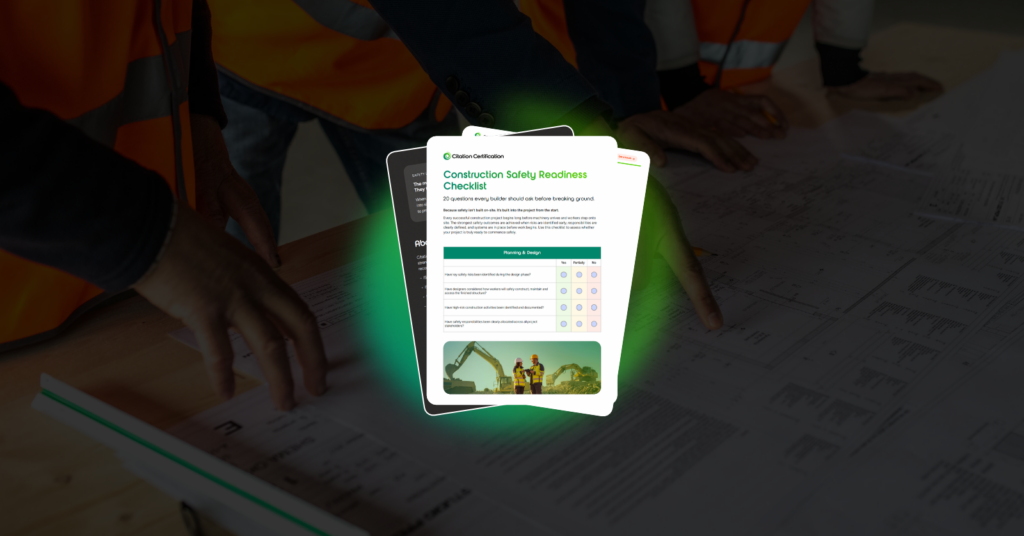
Safety isn’t built on site. It’s built into the project from the start — in...


Have your employees started submitting leave requests for December? Do your bar staff want to...


Nursing and care workers keep Australia’s health system running, and the work asks a lot...

Labour shortages. Multiple contractors and subcontractors. Tight deadlines. Client expectations. Compliance obligations across several sites...