







 HR & Safety Software
  ISO Training Academy
  foundU Client Login

Blogs
Brittany Byrne and Lisa Qiu selected for Elite Women 2026
Brittany and Lisa recognised by Australasian Lawyer and NZ Lawyer as Elite Women in 2026.
22 October, 2026
 Blogs
2 June, 2024
Blogs
2 June, 2024

The Fair Work Ombudsman (FWO) defines the right of entry in the workplace as the ability for union officials to enter a workplace or business premise to investigate suspected contraventions of the Fair Work Act 2009 (the ‘Act’). This also involves investigation into suspected contraventions around instruments such as modern awards or enterprise agreements. Union officials can also enter the workplace to hold discussions with employees.
A recent decision handed down by the Federal Court of Australia has highlighted just how important it is that employers understand the law, their obligations and how it impacts their business. Here our experts discuss this recent case, the lessons learnt, and explain the intricacies of the right to entry.
The Construction, Forestry, Maritime, Mining and Energy Union (CFMEU) and six of their officials faced $328,000 in penalties imposed by the Federal Court of Australia after they failed to adhere to the requirements of the right of entry procedure.
The Federal Court of Australia substantiated that the six officials from CFMEU had breached section 500 of the Fair Work Act in 2018 when they entered an extension construction site for Logan and Gateway Motorways. The officials entered the premises and failed to display entry permits when requested by the employer/site occupier. They also refused to leave when they were asked to.
CFMEU was found to be liable for the actions of the officials they employed. Therefore, the Court imposed penalties totalling $275,000 for the 11 substantiated contraventions.
This case is of particular significance because it affirms to businesses and permit holders the responsibility to uphold the correct process when exercising the right of entry. This case and its outcome are examples of the Federal Court holding entities that do not uphold the appropriate processes to account for.
All union officials who would like to exercise the right to entry into a workplace or business premises MUST hold a current and valid right of entry permit and they must meet any other entry requirements of the workplace (such as safety requirements, sign-in requirements, etc.). If an official doesn’t possess or is unable to present this permit, they may be in breach of the Act and can be asked to leave the premises.
Each State and Territory also provide Work Health and Safety (WHS) legislation that provides the right of entry into a workplace or business premises for WHS purposes. Union officials who seek to enter a premises for this purpose are not only required to obtain a Fair Work right of entry permit but also to comply with any WHS right of entry to premises.
A union official must meet the following criteria to obtain a right of entry permit:
Each right of entry permit is valid for three years and expires once this period is up. In other circumstances, a permit may expire if the permit holder stops being a union employee or official. The Commission also can suspend or revoke a permit.
Entry notice is a written notice and MUST be provided to the site occupier, as well as any other affected employers at least 24 hours, but not more than 14 days, before a visit. In special circumstances, the Commission can provide the permit holder with an exemption to enter to premises without notice. This is called an exemption certificate. Both the entry notice and the entry permit must be provided by the permit holder to the employer/site occupier if requested.
As an employer or site occupier, what is my responsibility during a visit?
The responsibility as an employer or site occupier is to:
Permit holders may exercise the right of entry to speak to employees of a workplace or business premises but there are rules they must follow when it comes to exercising this right. Permit holders are only allowed to speak with employees who:
Permit holders are also able to exercise the right of entry to investigate suspected contraventions of the Act or its related instruments. Whilst performing their investigation, permit holders can inspect any work, process or object that relates to the suspected contravention.
A permit holder can interview workers who are entitled to representation from the union the permit holder represents. A worker must also agree to be interviewed. Permit holders are also entitled to make copies or keep records relating to suspected contravention. In some circumstances a permit holder may serve notice to an employer to produce records later, this excludes records of non-union members records unless they have the non-members written permission or an order from the Commission.
Every business regardless of size or industry must understand their employer obligations inside out, getting them wrong can leave your organisation open to substantial fines and penalties as was the case of the CMFEU and Logan and Gateway Motorways.
If this article has raised questions about right to entry or you need assistance with another workplace matter, please contact our expert employment relations advisors via our 24/7 HR Advice.
Brittany and Lisa recognised by Australasian Lawyer and NZ Lawyer as Elite Women in 2026.

Every business ends the year with a couple of loose ends – the performance issue...

Brittany Byrne recognised as a finalist in the Mentor of the Year category.
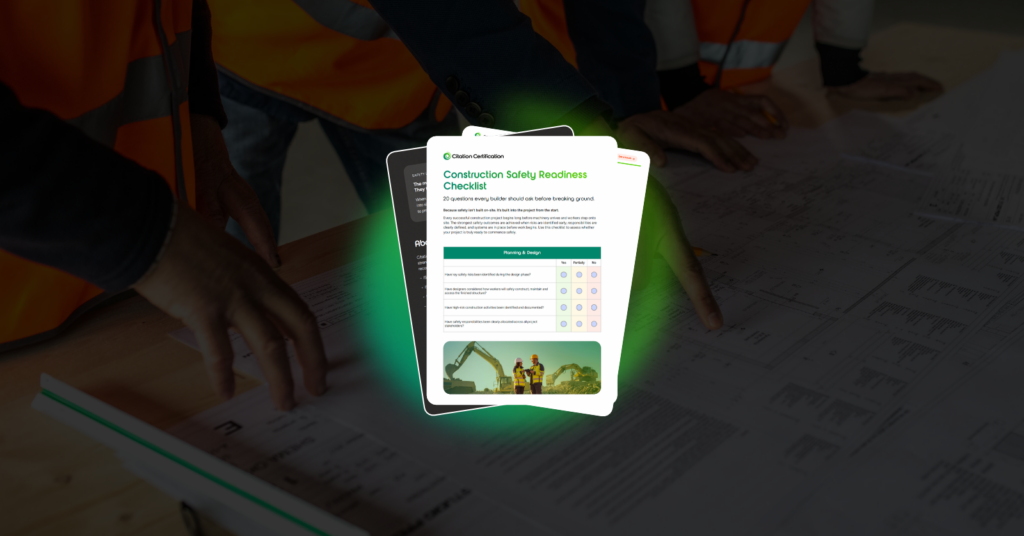

Safety isn’t built on site. It’s built into the project from the start — in...

Have your employees started submitting leave requests for December? Do your bar staff want to...