

 Citation HR
 HR Advice Line
 HR Software
 Citation Safety
 Safety Advice Line
 WHS Software
 Citation Certification
 ISO Certification
 NDIS
NDIS Citation Legal
 Workplace Law
 Migration Services




 HR & Safety Software
  ISO Training Academy


Blogs
What is the minimum wage in Australia?
So, what is the National Minimum wage, who decides what it should be, and how...
2 June, 2026



ISO 9001 is an international standard that defines the requirements for a quality management system (QMS). That’s compliance talk for a structured framework that helps any size business, in any industry, deliver consistent quality, manage risk, and drive continual improvement.
The current version, ISO 9001:2015, replaced ISO 9001:2008 and introduced a stronger emphasis on risk-based thinking, leadership accountability, and alignment with the external and internal factors affecting your business. It also follows the Annex SL structure, which makes it straightforward to integrate with other ISO standards.
ISO 9001 applies broadly. From local government, architecture, construction, and manufacturing to telecommunications, software development, and plumbing. Organisations across virtually every sector in Australia use ISO 9001 certification to demonstrate quality and win business.
ISO 9001 certification delivers measurable business benefits that go well beyond a certificate on the wall. Organisations certified to ISO 9001 typically see improvements in operational efficiency, customer relationships, and their ability to compete for new work, including a genuine competitive advantage when tendering for government and corporate contracts.






Ready to begin your ISO 9001 certification process? The team at Citation Group make this journey smooth and seamless. We’re by your side every step of the way, arming you with the right resources and taking the time to walk you through the standards.





ISO 9001:2015 is structured around ten clauses. The first three cover scope, references, and terms, while clauses 4 through 10 define the operational requirements of a compliant QMS.
It also follows the Annex SL structure, making it straightforward to integrate with other standards such as ISO 14001 (environmental management) or ISO 45001 (workplace health and safety). This is an approach known as triple certification.
Clause 4 of ISO 9001:2015 requires organisations to understand the external and internal factors that affect their ability to deliver quality outcomes, identify interested parties and their requirements, and define the scope of the QMS.
Clause 5 of ISO 9001:2015 requires senior management to demonstrate commitment to the QMS, establish a quality policy, and assign clear organisational roles and responsibilities for quality.
Clause 6 of ISO 9001:2015 requires organisations to apply risk-based thinking to identify risks and opportunities, set measurable quality objectives, and plan for changes that affect the management system.
Clause 7 of ISO 9001:2015 covers the resources, competence, awareness, communication, and documented information needed to support the effective operation of the QMS.
Clause 8 of ISO 9001:2015 covers the planning and control of the processes that deliver your products or services, including managing external providers and meeting customer requirements.
Clause 9 of ISO 9001:2015 requires organisations to monitor and measure QMS performance through internal audits, management review, and tracking of customer satisfaction.
Clause 10 of ISO 9001:2015 requires organisations to address nonconformities, take corrective action, and drive continual improvement across the QMS.

The most important factor when choosing an ISO 9001 certification body in Australia is JAS-ANZ accreditation. JAS-ANZ is the government-appointed body that authorises certification bodies to certify organisations against ISO standards. Without it, your certificate may not be recognised for government tenders, corporate procurement, or international purposes through the IAF.
Beyond accreditation, five factors are worth assessing:

Citation Group is a JAS-ANZ accredited ISO certification body with locally based auditors and consultants covering construction, manufacturing, engineering, government services, IT, healthcare, and more. We work with businesses of all sizes, and we’re focused on making certification straightforward, not stressful.
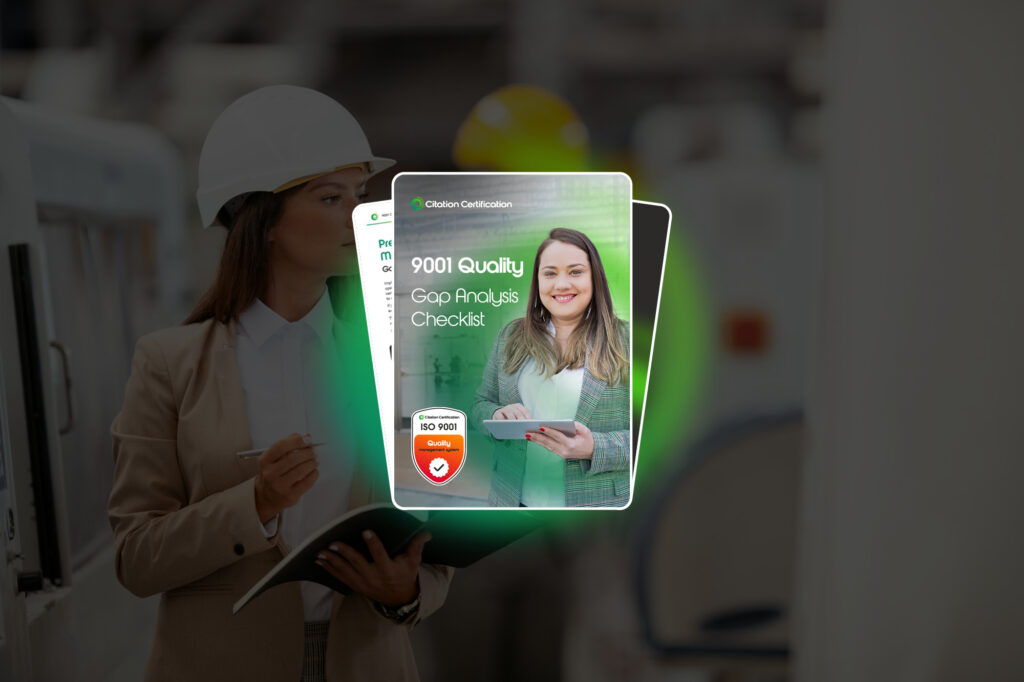
If you’re implementing an ISO 9001 QMS in your organisation and you’re preparing for an external audit, our ISO 9001 Gap Analysis Checklist will give you the list of items you need to prepare.
The first step in implementing an ISO management system in your organisation is to identify the gaps by comparing your current management systems with the ISO 9001:2015 requirements.
Citation Certification are friendly, helpful and offer great advice. Completing ISO audits is an opportunity to learn and fine tune our processes and policy. They facilitate a really open and safe environment which makes it less stressful and even enjoyable!
Everything you need to get certified, stay compliant, and choose the right partner.
So, what is the National Minimum wage, who decides what it should be, and how...


The Fair Work Commission’s Minimum Wage Panel has handed down its decision on the annual...

Conducting a disciplinary meeting isn’t always a straightforward process even for the most experienced business...

Every week, Citation’s advisory team takes calls from business owners navigating situations they didn’t see...

ISO 27001 is the internationally recognised standard for information security management systems (ISMS).
ISO 9001 certification is formal recognition that an organisation’s QMS meets the requirements of the ISO 9001 standard. It’s issued by a JAS-ANZ accredited certification body following a two-stage audit process, and demonstrates a commitment to consistent quality, customer satisfaction, and continual improvement.
ISO 9001 is built on seven quality management principles that form the foundation of an effective QMS. They guide how your system is designed, implemented, and maintained.
These seven principles underpin every clause of the ISO 9001:2015 standard. They’re what auditors assess against during your ISO 9001 audit.
The process has four stages:
Annual surveillance audits then maintain certification over a three-year cycle.
ISO 9001 certification costs in Australia depend on four key variables: the size of your organisation (number of employees), the number of sites or locations in scope, your industry and the complexity of your processes, and the current maturity of your QMS.
As a general guide, small organisations with straightforward operations and a single site will pay significantly less than larger, multi-site businesses with complex processes. The certification market in Australia is regulated. JAS-ANZ accredited bodies like Citation Group calculate fees based on the auditor time required, which is determined by scope and complexity.
At Citation Group, all pricing is transparent and all-inclusive. There are no hidden reporting, preparation, or administration fees.
Visit our ISO 9001 certification cost page or contact us for a quote.
How long it takes to get ISO 9001 certified depends on the maturity of your existing QMS. Organisations with strong existing processes can move through gap analysis, ISO 9001 implementation, and both audit stages in a few months. Those starting from scratch typically need longer to build documented procedures and complete internal audits before the Stage one assessment.
Your Citation Group consultant will give you a realistic timeline based on your situation.
ISO 9001 certification is valid for three years. Annual surveillance audits are required to maintain ISO 9001 compliance during that period. After three years, a recertification audit renews your certificate. Only certifications from IAF-recognised bodies like Citation Group carry this formal international recognition.
No, ISO 9001 is not a legal requirement in Australia. However, it is a common commercial requirement. Many government agencies and large corporates require current ISO 9001 certification as a condition of tendering or supply chain eligibility, making it effectively necessary for businesses competing for those contracts.
ISO 9001:2015 replaced ISO 9001:2008 and introduced several key changes: a stronger emphasis on risk-based thinking, greater focus on leadership accountability, alignment with external and internal factors affecting the organisation, and adoption of the Annex SL structure for easier integration with other ISO standards. Organisations still certified to ISO 9001:2008 are required to transition to the 2015 version.
ISO 9001 certification applies to your organisation. It means your QMS has been independently assessed and found to comply with ISO 9001.
ISO 9001 accreditation applies to the certification body. It means a national authority has assessed the certification body’s processes and auditors against international standards.
Choosing a JAS-ANZ accredited body like Citation Group ensures your certificate carries formal international recognition.
Yes. Your ISO 9001 certification can be transferred to Citation Group without losing your current certification status. We align with your existing certification schedule to make the transition seamless. Contact us for a no-obligation quote.
Triple certification means achieving ISO 9001 (quality management), ISO 14001 (environmental management), and ISO 45001 (health and safety) together as an integrated management system. Since all three standards share the Annex SL structure, they can be implemented and audited together. This reduces duplication, simplifies ongoing compliance, and demonstrates a comprehensive commitment to operational excellence.