







 HR & Safety Software
  ISO Training Academy
  foundU Client Login

Loved working with the auditors for our ISO Accreditation. They provided me with valuable feedback and observations that will certainly enhance the business. I felt very well supported during this process as it was my first audit experience.


An ISO 9001 audit is an independent assessment of your quality management system (QMS) conducted by an accredited certification body to verify that your organisation meets the requirements of ISO 9001:2015, the international standard for quality management.
The full ISO 9001 auditing process covers an initial two-stage certification audit, annual surveillance audits, and a recertification audit every three years. Your team will run internal audits as an ongoing part of maintaining your QMS, which your external auditor reviews as part of the certification audit process.
The ISO 9001 audit process is more straightforward than many businesses expect. Here’s what happens at every stage, from initial documentation review through to recertification.





No surprises – just process. ISO 9001 auditors assess whether your QMS is genuinely embedded in how your organisation operates. Here’s what your auditor is looking for at every stage of the ISO audit:

Internal audits are a mandatory requirement of ISO 9001:2015. You need to plan and carry these out regularly, checking your quality management system is working as intended and catching anything that needs fixing before your external auditor does.
Your external auditor will review your internal audit records, findings, and any corrective actions you’ve taken. A well-run program includes:
Auditor training is worth investing in. The people running your internal audits need a solid understanding of ISO 9001:2015 and the ability to assess your processes without bias. Citation Group provides complimentary online training to help.

We’ve helped over 3,500 Australian businesses achieve ISO certification. Here’s what you get when you work with us.
Loved working with the auditors for our ISO Accreditation. They provided me with valuable feedback and observations that will certainly enhance the business. I felt very well supported during this process as it was my first audit experience.

Thank you for working with us to obtain ISO 45001 Certification. The process was thorough, structured and efficient and the system enhancements we have made to achieve certification will benefit our company greatly.
The breadth of experience and technical expertise you brought to the process was invaluable and really appreciated by all the senior leadership team involved.

The collaborative relationship we’ve developed with Citation Certification has turned into a true partnership where our business needs are holistically understood and supported.

The auditor that was assigned to us was fantastic. He explained what was expected and required before the audit commenced. And even during the audit process, when things were being identified or uncovered, we could work quite dynamically. He was really accommodating and professional, and really quite pragmatic in the recommendations for improvement, which we’ve taken on board.

Our most recent audit cycle was one of the most positive experiences we’ve had since certifying to ISO/IEC 27001:2022, and the relaxed nature allowed us to engage in discourse that was open and honest about gaps and our plans to fix them.

Brittany Byrne recognised as a finalist in the Mentor of the Year category.
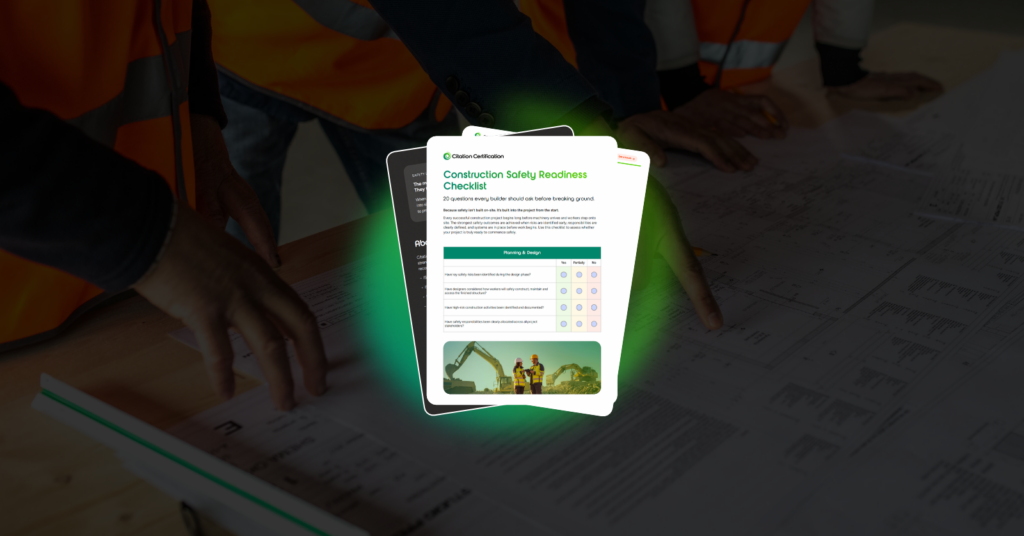
Safety isn’t built on site. It’s built into the project from the start — in...


Have your employees started submitting leave requests for December? Do your bar staff want to...
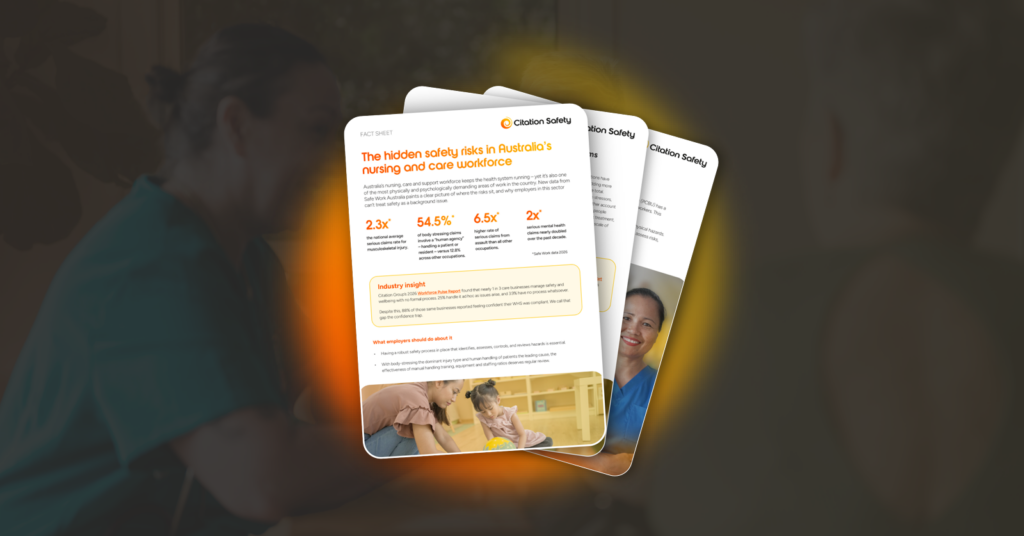

Nursing and care workers keep Australia’s health system running, and the work asks a lot...

Labour shortages. Multiple contractors and subcontractors. Tight deadlines. Client expectations. Compliance obligations across several sites...
An ISO 9001 audit typically takes one to two days on-site for a small to medium business, depending on your organisation’s size, number of sites, and the complexity of your QMS. Stage one is usually a few hours and can be conducted remotely.
Your Citation auditor will confirm the expected duration before you begin. If you’re still in the ISO 9001 implementation phase, they can also help you understand what to have in place before audit day arrives.
Nonconformities found during an ISO 9001 audit are classified as major or minor. Major nonconformities must be resolved before certification is issued. You’ll address minor nonconformities within an agreed timeframe after certification. Your Citation auditor will explain every finding clearly and guide you through what’s required.
Yes. Internal audits are a mandatory requirement of ISO 9001:2015. Your external auditor will review your internal audit records, findings, and corrective actions as part of the certification audit process. Citation Group provides complimentary online training to help your team develop internal auditing capability.
After initial certification, ISO 9001 requires annual surveillance audits in year one and year two of your three-year certification cycle. A full recertification audit is then required every three years to maintain your certified status.
In Australia, ISO 9001 certification companies should hold JAS-ANZ accreditation, the Joint Accreditation System of Australia and New Zealand. JAS-ANZ accreditation confirms the independent certification body meets international standards for competence and impartiality. Citation Group is JAS-ANZ accredited, making our certifications recognised nationally and internationally.
ISO 9001 certification cost in Australia typically depends on your organisation’s size, number of sites, and the complexity of your quality management system. Larger organisations with more complex QMS requirements will generally pay more due to longer audit durations. Visit our ISO 9001 certification pricing page or contact us for more information.