







 HR & Safety Software
  ISO Training Academy
  foundU Client Login
Blogs
Brittany Byrne named finalist in the 2026 Lawyers Weekly Women in Law Awards
Brittany Byrne recognised as a finalist in the Mentor of the Year category.
15 October, 2026
 Blogs
7 April, 2026
Blogs
7 April, 2026

Every Australian employer has a legal duty to comply with the Work Health and Safety Act 2011 – and understanding what that means in practice is essential. At its core, work health and safety (WHS) compliance requires businesses to identify and control hazards, keep procedures safe and up to date, train and consult workers, and take psychological safety just as seriously as physical safety. The stakes are high: employers who fall short can face heavy fines, prosecution, and personal liability for directors and officers.
This guide explains what WHS compliance means for you, where most Australian businesses fall short, and what non-compliance actually costs.
WHS compliance means meeting your legal obligations under the Work Health and Safety Act 2011, which is the broad national framework that governs workplace health and safety across most of Australia. It sets out the duties of every person conducting a business or undertaking (PCBU), the rights of workers, and the enforcement powers of WHS regulators. At its core, WHS compliance is about making your workplace genuinely safe, not just on paper.
A PCBU is any person or entity that conducts a business or undertaking, whether for profit or not. This includes companies, sole traders, partnerships, franchisees, and not-for-profits. If your business engages workers (employees, contractors, labour hire, apprentices, or volunteers) and influences how that work is done, you are a PCBU and these obligations apply to you.
Compliance involves more than having a policy document on file. It means building practical, compliance-ready systems into the way work is done every day: procedures your team can follow, training that’s genuinely understood, and a safety culture that encourages people to raise concerns before incidents occur. For many businesses, working with WHS experts is the most reliable way to close the gap between what the law requires and what’s actually in place.
The WHS Act doesn’t just ask employers to care about safety. It imposes specific, enforceable duties. Meeting these compliance requirements means building practical solutions into your workplace safety framework.
Every PCBU must ensure, so far as is reasonably practicable, a working environment that is safe and free from health risks. That phrase, ‘So far as is reasonably practicable,’ isn’t a loophole. It means weighing the likelihood and severity of harm against the cost and practicability of controlling it and acting on that assessment. Regulators and courts look closely at whether that weighing was genuinely done, or whether risks were simply accepted without scrutiny.
Employers need a documented process for identifying potential hazards, evaluating how serious they are, and implementing controls proportionate to the risk. This isn’t a one-off exercise. It has to move with the business. New equipment, new tasks, new people, new premises – each changes the risk profile, and assessments need to reflect that.
Documented WHS policies and safe work procedures are a core requirement. The emphasis is on ‘documented’ and ‘accurate’. Policies that sit in a folder and don’t reflect how work is actually done aren’t compliance. They’re a liability. When a regulator reviews documentation after an incident, they’re looking for evidence that your systems match your operations. Generic templates rarely satisfy that test.
Workers must receive the information, instruction, training, and supervision they need to do their work safely. This must be relevant to their specific roles and the hazards they face, not just an induction checklist ticked on day one. The benefits of getting this right extend well beyond compliance: well-trained workforces have fewer incidents, lower workers’ compensation costs, and a measurably stronger safety culture.
Training records are among the first things a regulator will request after an incident, and gaps in documentation can significantly undermine a business’s legal position even where the training itself was adequate.
Consultation isn’t just good practice – it’s a legal requirement. Employers must consult workers on health and safety matters that affect them, including changes to processes, hazard identification, and risk decisions, giving them a genuine opportunity to contribute before those decisions are made. This matters in practice because workers often have the clearest view of where the real hazards are. A regulator reviewing a business after an incident will look at whether consultation was genuine or performative. A sign-off on a form isn’t the same thing as actually involving people.
Workers can also elect health and safety representatives (HSRs) to act on their behalf, and businesses have specific obligations around how they engage with those representatives.
When a notifiable incident occurs, such as a workplace fatality, serious injury, or dangerous incident, the relevant WHS regulator must be notified immediately and the site left undisturbed. Beyond notification, incident investigation, corrective action, and follow-through are all part of what the law expects.
Near misses sit outside formal notification requirements, but a functioning safety management system captures and acts on them. Their absence is noticed by regulators assessing whether a safety culture genuinely exists. Robust safety management systems treat near misses as data, not noise.
Employers are now required to identify, assess, and control risks to psychological health with the same rigour applied to physical hazards. These risks include excessive workload, poor job design, bullying, role ambiguity, and exposure to traumatic content. Controlling these risks means addressing the design and management of work itself: workload distribution, job clarity, management practices, and how conflict and grievances are handled.
An EAP or wellbeing program is a useful support, but it’s not the same as identifying and controlling psychosocial risk at the source. Regulators across Australia are actively enforcing in this space, and the businesses most exposed are often those that haven’t yet treated psychological safety as a structured compliance obligation.
When it comes to managing workplace hazards, Australian WHS legislation prefers that you follow their steps. You’re required to work through the hierarchy of controls – a structured, prioritised framework for eliminating or reducing risk:
Defaulting to PPE or administrative controls when higher-order measures are reasonably practicable is a well-recognised compliance failure. If your risk assessments don’t document why certain controls were selected over others, that’s a gap worth addressing. Education about this hierarchy is a core part of any effective induction or safety training program, and keeping that training current is key to keep up with evolving regulatory requirements.
WHS obligations apply to every employer in Australia, but regulatory scrutiny is heavier in industries where the consequences of failure are more severe. The sectors that attract the closest attention include:
No industry is exempt. Many companies undergo formal WHS audits for the first time and are genuinely surprised by what they find. Regular audits are one of the most effective tools for identifying responsibility gaps before a regulator does it for you. For locally grounded support, our WHS consultants Sydney and WHS consultants Brisbane services cover the specific regulatory environment in New South Wales and Queensland.
WHS regulators across Australia have real enforcement powers, and they use them. When they find non-compliance, they can issue improvement notices requiring you to fix identified issues within a set timeframe, or prohibition notices that stop unsafe work immediately. In more serious cases, matters are referred for prosecution.
The WHS Act establishes three categories of offence. Penalty amounts are indexed annually – Safe Work Australia publishes the current maximums for each financial year. The following reflects the WHS Act maximums as of 1 July 2025:
Beyond the financial penalties, non-compliance carries costs that don’t appear in the fines themselves. These include workers’ compensation claims, lost productivity, staff turnover, reputational damage, and the stress of regulatory investigation. Proactive WHS compliance is consistently less costly than the alternative.
Most WHS compliance failures aren’t dramatic. They tend to be the product of systems that were set up once and never maintained. The gaps that appear most frequently in compliance audits include:
Incident reporting also gives your business something most internal reviews can’t – an honest picture of where safety is actually breaking down, before someone gets hurt.
For many businesses, the most efficient way to understand where they stand is through a formal WHS consultation, which is carried out by a safety professional with extensive experience across their industry and the relevant regulations. What an independent review brings to light is rarely visible from inside the organisation.
Get the response wrong in one area and you can create liability in the other. WHS compliance and workplace relations are more connected than many employers realise. Managing injured workers, responding to bullying complaints, handling psychological injury claims – these all sit at the intersection of safety law and employment law.
Businesses that invest in strong WHS systems, and take steps to ensure compliance is built into everyday operations rather than bolted on, tend to navigate these situations more effectively. Clear WHS policies, trained managers, and a genuine safety culture reduce ambiguity about what’s expected. Less ambiguity means fewer disputes. Organisations where safety management and people management work closely together, rather than in separate lanes, consistently produce better outcomes for both employers and employees.
WHS compliance is complex, and getting it wrong is more expensive than getting it right. The rules keep changing, penalties are significant, and the gap between what’s required and what’s in place is often wider than employers expect. But you don’t have to work through it alone.
Citation Group’s workplace compliance services cover everything from initial WHS risk assessment and gap analysis through to building safety systems that hold up when it matters. Clients range from small businesses navigating WHS obligations for the first time to large operators managing complex, multi-site risk. Tailored solutions are built around each client’s specific industry, operations, and regulatory obligations.
A WHS compliance audit is the clearest way to find out where your business stands before a regulator does it for you. If you’re dealing with an active issue or have received a notice, the 24/7 Safety Advice Line provides ongoing support and puts you straight through to a qualified safety professional.
Not yet a Citation Group client? Reach out to our team today for a confidential chat about where your business stands and what needs to happen next.
WHS compliance means meeting your obligations under the Work Health and Safety Act and any applicable state-based legislation. As a PCBU, you have a primary duty of care to ensure, so far as is reasonably practicable, a safe working environment for your workers. In practice, it means identifying and managing workplace hazards, keeping safe work procedures current, training and consulting workers, and having a clear process for reporting and investigating incidents.
Yes. WHS obligations apply to all Australian businesses regardless of size. Whether you’re a sole trader, a small team, or a large enterprise, the primary duty of care under the WHS Act applies to you. The scope of what’s required scales with the nature and complexity of your operations, but the legal obligation itself doesn’t change because a business is small. Many small businesses are significantly exposed to compliance risk without realising it, particularly in relation to documentation, risk assessment processes, and psychosocial hazard management. Our WHS consulting for small business service is designed for exactly this situation.
A WHS policy sets out an organisation’s commitment to workplace health and safety and the principles that guide its approach. A WHS management system is the broader operational framework: the processes, procedures, risk registers, training records, and review mechanisms that translate that policy into practice. A policy alone is not compliance. You need systems in place that actively manage safety risks as part of how the business operates day to day.
Psychosocial hazards are aspects of work design, management, and the work environment that can cause psychological harm. Common examples include excessive workload, low job control, workplace bullying, poor management support, and exposure to traumatic events or content. Under current WHS regulations, you are required to identify, assess, and control psychosocial hazards with the same rigour you apply to physical risks. WHS regulators across Australia have made this an active enforcement area.
Workplace compliance services help Australian businesses meet their legal obligations under WHS legislation – covering everything from risk assessments, policies, and safe work procedures through to audits, training, and ongoing advisory support. Any business with workers has WHS obligations, but many lack the in-house expertise to manage them effectively. Engaging an expert provider gives you access to qualified safety professionals who can identify gaps, draw on deep knowledge of Australian WHS legislation, develop and oversee the implementation of the right systems, and keep your business compliant as regulations change.
If a WHS regulator identifies non-compliance, they can issue an improvement notice requiring corrective action within a set timeframe, a prohibition notice stopping unsafe work immediately, or refer the matter for prosecution.
Financial penalties are significant. Under the model WHS Act, the maximum Category one penalty for a body corporate is $11,839,000 as of 1 July 2025, with amounts indexed annually by Safe Work Australia. Officers and directors can also be personally prosecuted under their due diligence obligations. If your business receives a notice, taking immediate action with the assistance of a qualified safety professional is essential.
Brittany Byrne recognised as a finalist in the Mentor of the Year category.
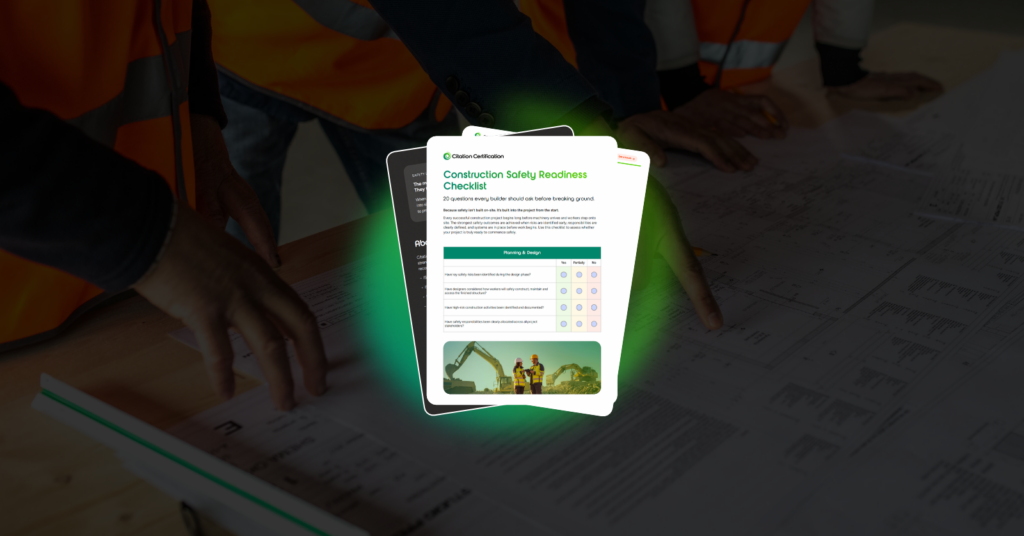

Safety isn’t built on site. It’s built into the project from the start — in...


Have your employees started submitting leave requests for December? Do your bar staff want to...
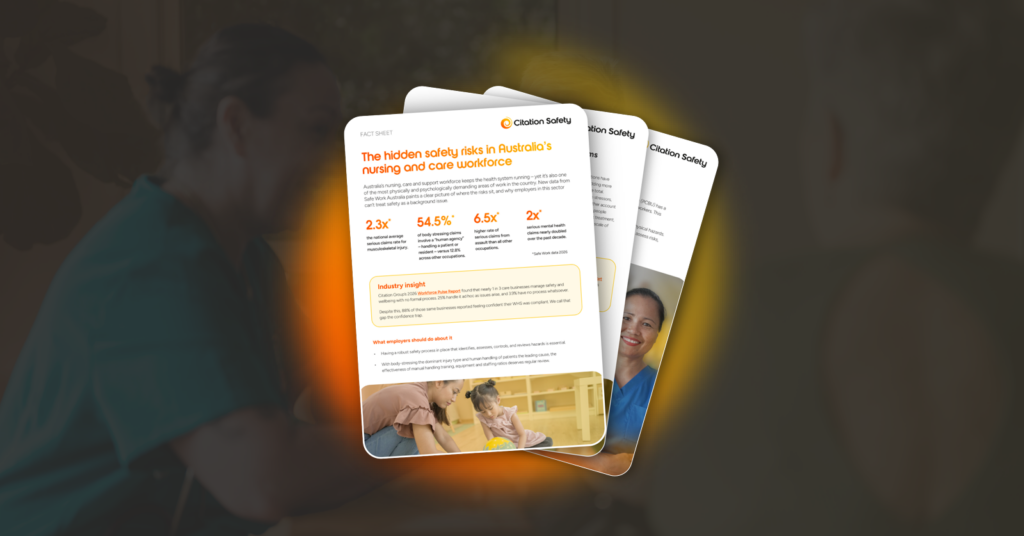
Nursing and care workers keep Australia’s health system running, and the work asks a lot...

Labour shortages. Multiple contractors and subcontractors. Tight deadlines. Client expectations. Compliance obligations across several sites...