







 HR & Safety Software
  ISO Training Academy
  foundU Client Login

Blogs
Brittany Byrne and Lisa Qiu selected for Elite Women 2026
Brittany and Lisa recognised by Australasian Lawyer and NZ Lawyer as Elite Women in 2026.
22 October, 2026
 Blogs
22 July, 2026
Blogs
22 July, 2026

As of 1 July 2026, Payday Super law now requires employers to pay superannuation guarantee contributions at the same time as wages, with funds required to land in the employee’s account within seven business days. That’s a genuine shift from the old quarterly cycle, and the ATO will lean on your STP data to check you’re keeping up.
The Small Business Superannuation Clearing House stopped taking contributions from 1 July 2026. If you were relying on it, you should already have a replacement clearing house in place.
Add PAYG withholding, correct award interpretation, and the requirement to keep accurate employee records for seven years, and you’ve got a compliance workload that can overwhelm businesses whose systems are only a few years out of date.
None of these obligations are optional extras, and the businesses treating them as an afterthought are the ones that end up explaining themselves to an inspector.
Here’s the pattern: a roster changes in one system, payroll doesn’t see it, an employee works an extra shift, and the pay run is wrong. That’s an underpayment under the Fair Work Act and a reporting discrepancy under STP Phase 2 — one gap, two separate problems.
Leave works the same way. A request submitted through an HR tool that doesn’t talk to payroll means leave balances drift and loading calculations go stale. Long service leave accruals can fall out of sync too — worth remembering that most long service leave entitlements actually come from state and territory legislation, not the Fair Work Act itself, so the exact rules shift depending on where your people are based.
Payday Super makes the cash-flow side of this worse for anyone used to a quarterly rhythm. Without rostering, HR and payroll talking to each other in real time, forecasting what you owe each pay run turns into guesswork.
Integration fixes the root problem: rostering, leave, onboarding and payroll live in the same place, audit trails stay consistent, and records match. This consistency is what counts on the day the ATO comes calling.
Not all HR payroll software understands Australia. A platform built overseas will make you handle leave loading and long service leave manually — exactly the manual risk you’re trying to remove. Prioritise systems with:
● Automated STP Phase 2 reporting for every pay event, with no manual steps.
● Built-in super processing that meets Payday Super requirements.
● Native award interpretation, applying correct rates and penalties automatically.
● Leave loading and long service leave calculated out of the box.
● Cloud-based, tamper-free record-keeping that meets the seven-year rule without you thinking about it.
● Self-service portals so staff handle their own leave requests and payslips.
● Accounting software integration so payroll journals post themselves.
Ask any vendor directly how they handle legislative change. The good ones push updates automatically. If the answer involves you manually reconfiguring anything, that’s your red flag.
Buying the right system is half the job. Implementation is the other half, and it’s where most of the value gets won or lost.
Start with an audit: every award, every leave type, every reporting obligation you currently carry. Test STP compatibility before go-live – don’t assume it. Migrate data carefully, with someone accountable for checking accuracy before the first live pay run. Train the humans: payroll officers, HR managers, and line managers approving timesheets all need to understand the new system, because a tool nobody understands gets worked around, and workarounds recreate the exact gaps you paid to close. Then audit your first three pay runs closely – check super is landing, leave balances are updating, and STP reports are reaching the ATO clean.
Treat that first quarter as part of the implementation, not the finish line; problems caught proactively are cheaper than those that emerge during audits.
Citation Group has spent over three decades helping Australian businesses stay compliant and confident, across HR, payroll, legal, safety and certification. Its foundU platform combines native payroll, onboarding, rostering and time-tracking, built for Australia’s award system. Citation HR backs that with people-management advice, and Citation Legal steps in when employment law questions get complicated. With Payday Super now active, getting the technology and the advice right from day one isn’t optional anymore.
Brittany and Lisa recognised by Australasian Lawyer and NZ Lawyer as Elite Women in 2026.

Every business ends the year with a couple of loose ends – the performance issue...

Brittany Byrne recognised as a finalist in the Mentor of the Year category.
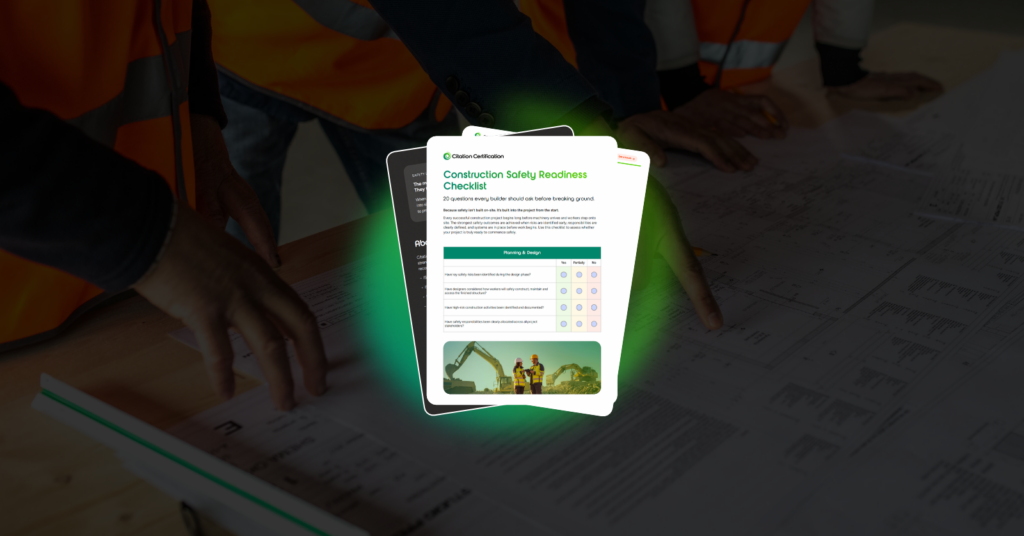

Safety isn’t built on site. It’s built into the project from the start — in...

Have your employees started submitting leave requests for December? Do your bar staff want to...