







 HR & Safety Software
  ISO Training Academy
  foundU Client Login

Blogs
Brittany Byrne and Lisa Qiu selected for Elite Women 2026
Brittany and Lisa recognised by Australasian Lawyer and NZ Lawyer as Elite Women in 2026.
22 October, 2026
 Blogs
20 August, 2026
Blogs
20 August, 2026

The Workforce Pulse 2026, a national survey of 510 Australian business leaders from Citation Group, found that confidence in workplace decision-making is high. 97 per cent of leaders feel confident managing their workforce responsibilities. But feeling confident and being able to prove a decision was handled fairly aren’t the same thing.
Ilana Kaye, Head of Advisory Operations at Citation HR, puts it plainly:
“You don’t know what you don’t know. Confidence without the right knowledge can create real risk in an employment context. You may genuinely believe you’re doing the right thing, but where procedural fairness is missing, decisions can still be found unfair, even if there’s a valid reason, and claims can succeed largely because of process failures.”
A manager might have every reason to act. But without a record of the conversations, warnings or considerations behind the decision, there’s little to point to if that decision is ever questioned. A fair outcome and a defensible outcome aren’t automatically the same thing.
Part of this comes down to how HR is handled day to day. The Workforce Pulse 2026 found that 44 per cent of businesses have no clear approach to HR and people management. Issues are handled case by case, not through a consistent process.
That pressure builds with size. 33 per cent of medium businesses report frequent people management issues, more than double the rate of small businesses. What works at five employees doesn’t always hold at 50. More decisions get made, by more people, with less oversight of how each one is recorded.
That inconsistency catches up eventually. A termination decision needs to stand up to scrutiny long after it’s made, often when no one clearly remembers the details. Even a weak claim still needs a full response, and responding to a formal grievance, even one that goes nowhere, takes time and management focus most businesses don’t have spare.
It’s the message the experts in the Workforce Pulse 2026 keep coming back to: document every decision. Performance conversations, complaints and the reasoning behind a termination need to be recorded in writing at the time, not reconstructed later.
This isn’t about covering every base for its own sake. It’s about making sure a decision made fairly can also be shown to be fair. The conversation and the record serve two different purposes, and skipping the second leaves the first exposed.
None of this depends on a large HR team or a formal system. It depends on treating every conversation as something worth recording properly, regardless of business size. The same principle applies well beyond termination too: flexible work requests, performance reviews and complaints all carry the same requirement, a decision that was genuinely considered needs to look like it was, on paper.
Getting the conversation right matters. So does making sure it isn’t the only evidence of what took place.
Interested in learning how to build a compliant termination process? Our video, Termination without tears, dives into test the Fair Work Commission uses to assess a dismissal and the practical steps to make your termination process legally sound.
Brittany and Lisa recognised by Australasian Lawyer and NZ Lawyer as Elite Women in 2026.

Every business ends the year with a couple of loose ends – the performance issue...

Brittany Byrne recognised as a finalist in the Mentor of the Year category.
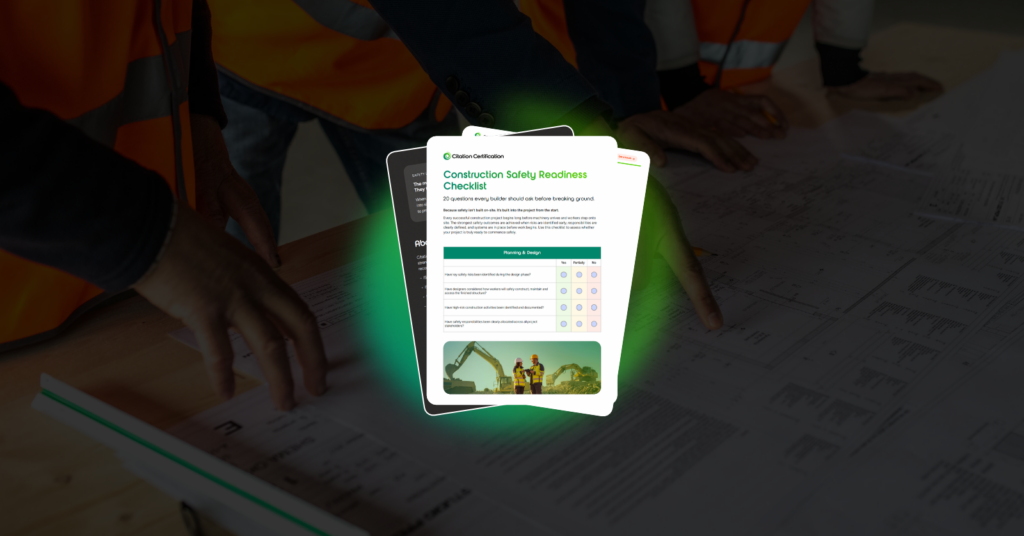

Safety isn’t built on site. It’s built into the project from the start — in...

Have your employees started submitting leave requests for December? Do your bar staff want to...