







 HR & Safety Software
  ISO Training Academy
  foundU Client Login

Blogs
Brittany Byrne and Lisa Qiu selected for Elite Women 2026
Brittany and Lisa recognised by Australasian Lawyer and NZ Lawyer as Elite Women in 2026.
22 October, 2026
 Blogs
24 August, 2026
Blogs
24 August, 2026

Workplaces often rely on people working closely together, sometimes under pressure, for extended periods. When things run smoothly, the teamwork is seamless. When they don’t, the impact is felt quickly by staff, by customers or clients, and ultimately by the business.
The challenge for employers isn’t eliminating conflict altogether, but recognising when a normal workplace disagreement tips into something that requires intervention, and knowing how far that intervention needs to go.
In most workplaces, conflict rarely starts with a single dramatic incident. More often, it develops incrementally from fairly ordinary workplace dynamics. Common sources include differing communication styles between team members, disputes about workloads or rosters, frustration caused by staffing shortages, or performance issues that have been left unaddressed for too long. On their own, these issues aren’t inherently legal problems. The legal risk emerges when behaviour is repeated, ignored or mishandled, particularly once someone starts to feel targeted, marginalised or unsafe at work.
One of the most consistent mistakes employers make is assuming that low-level conflict will resolve itself if left alone. In practice, this approach often has the opposite effect. From both an HR and legal perspective, early intervention is critical. Employers have positive obligations under work health and safety laws to provide a psychologically safe workplace. Once management is on notice of interpersonal conflict that may be affecting wellbeing, inaction becomes a risk in itself.
Importantly, early intervention doesn’t mean establishing a formal process at the first sign of tension. It means acknowledging the issue, setting expectations, and making it clear that inappropriate behaviour, however subtle, won’t be tolerated.
Most workplace conflict can, and should, be managed informally in the first instance. Informal intervention is often the most effective way to reset behaviour before positions become entrenched. At a practical level, this usually involves a structured conversation with the relevant staff member or team. The focus should be on observable behaviour and its impact on colleagues or the business, rather than on intent or personality. Clear expectations should be reinforced, along with what needs to change going forward.
Informal intervention isn’t simply a “quiet word” that leaves no record and no follow-up. Even informal steps should be documented, not as a disciplinary measure, but as evidence that the business acted reasonably and proactively. This documentation becomes particularly important if the issue later escalates or if the employee alleges that concerns were ignored.
Not all conflict can be resolved with an informal approach. There are clear points at which a business should move to a more formal process.
Formal intervention is generally required where allegations involve bullying, harassment, or discrimination, where there is a risk of psychological injury, or where behaviour has continued despite prior discussions. It’s also appropriate where the conduct, if substantiated, could lead to disciplinary outcomes. At this stage, process matters. Employers are expected to apply procedural fairness, clearly identifying the allegations, giving the employee an opportunity to respond, and making decisions based on evidence rather than assumptions.
In smaller or tight-knit businesses, this can be particularly challenging due to the close working relationships involved. When the complaint concerns a senior staff member, manager, or business owner, the power imbalance must be carefully managed. In many cases, engaging external support provides not just objectivity, but credibility.
A common error is attempting to deal with serious allegations in a way that is neither fully informal nor properly formal. For example, conducting an “off the record” investigation but imposing employment consequences, or reshuffling duties without addressing the underlying complaint.
These half-formal approaches often increase legal risk rather than reduce it. Employees may later argue that decisions were made without due process, or that disciplinary action was disguised as something else. If a matter ends up before a tribunal or insurer, unclear processes are difficult to defend.
The key question for employers is simple: if this issue escalated, could you clearly explain what you did, why you did it, and how you ensured fairness?
Documentation is often viewed by small employers as something to be avoided for fear of “creating a paper trail”. In reality, the absence of records is far more problematic.
Good documentation doesn’t need to be lengthy or legalistic. It should record the issue raised, the steps taken, any expectations set, and the outcome. Done correctly, it demonstrates that the business took reasonable steps to manage risk and support staff appropriately.
In the context of workers’ compensation or bullying claims, contemporaneous notes are often the most persuasive evidence available.
Most business owners don’t expect managing staff conflict to be a significant part of ownership. Nonetheless, employing staff brings with it responsibility for addressing interpersonal issues in the workplace. While tribunals recognise that owners aren’t HR professionals, they do expect a reasonable, consistent and timely response when problems arise.
Businesses that manage conflict well set clear behavioural expectations and intervene early. Where this doesn’t occur, relatively minor issues often escalate into costly and disruptive disputes.
Conflict rarely resolves itself. Addressed early, it can usually be managed.
Citation Group has supported Australian businesses for more than 30 years, since its founding as FCB Group in 1993, and now works with over 25,000 businesses across Australia. Our team fields more than 40,000 advisory calls a year, and our clients save up to 600 hours a year on HR admin.
At Citation Group, we cover employment contracts, award classification, payroll, onboarding, and ongoing compliance monitoring. Whether you’re hiring your first employee or managing a team of 50, our goal is the same: help you stay compliant and keep growing. Contact us here to see how we can help.
Brittany and Lisa recognised by Australasian Lawyer and NZ Lawyer as Elite Women in 2026.

Every business ends the year with a couple of loose ends – the performance issue...

Brittany Byrne recognised as a finalist in the Mentor of the Year category.
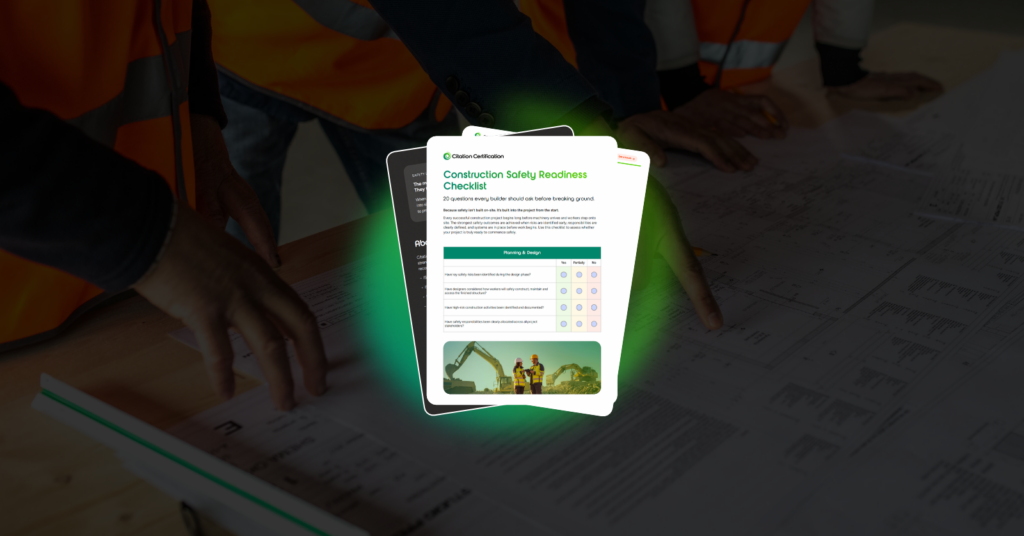

Safety isn’t built on site. It’s built into the project from the start — in...

Have your employees started submitting leave requests for December? Do your bar staff want to...