







 HR & Safety Software
  ISO Training Academy
  foundU Client Login

Loved working with the auditors for our ISO Accreditation. They provided me with valuable feedback and observations that will certainly enhance the business. I felt very well supported during this process as it was my first audit experience.


ISO 27001 compliance means your organisation has implemented an ISMS that meets the requirements of ISO/IEC 27001:2022 – the international standard for managing information security.
An ISMS is a structured framework of policies, processes, and information security controls for managing sensitive data and managing information security risks. It covers the confidentiality, integrity, and availability of information, and supports both data security and continuous improvement as your organisation evolves.
In practice, being ISO 27001 compliant means you’ve:
ISO/IEC 27001:2022 is built around a risk based approach. Rather than prescribing a fixed list of controls, the standard requires you to assess your own information security risks and implement appropriate security measures based on those findings.







ISO/IEC 27001:2022 Annex A organises its 93 controls into four themes. Together they cover the full scope of information security, from how your organisation governs security through to the technical measures protecting your data.
ISO 27001 certification isn’t just about passing an audit. A certified ISMS integrates security into the core of your business. It delivers measurable commercial, operational, and reputational benefits well before your certificate is issued.






Many organisations use ‘compliance’ and ‘certification’ interchangeably. They aren’t the same.
For most Australian businesses, certification is the goal. It’s what gives your compliance credibility with clients, government bodies, and supply chain partners. In sectors like professional services, healthcare, technology, and government contracting, meeting ISO 27001 requirements is increasingly a condition of doing business. It’s not just a way to manage information security risk.

Citation Group is a JAS-ANZ accredited certification body with extensive experience across various Australian industries. When you work with us, you get:
Loved working with the auditors for our ISO Accreditation. They provided me with valuable feedback and observations that will certainly enhance the business. I felt very well supported during this process as it was my first audit experience.

Thank you for working with us to obtain ISO 45001 Certification. The process was thorough, structured and efficient and the system enhancements we have made to achieve certification will benefit our company greatly.
The breadth of experience and technical expertise you brought to the process was invaluable and really appreciated by all the senior leadership team involved.

The collaborative relationship we’ve developed with Citation Certification has turned into a true partnership where our business needs are holistically understood and supported.

The auditor that was assigned to us was fantastic. He explained what was expected and required before the audit commenced. And even during the audit process, when things were being identified or uncovered, we could work quite dynamically. He was really accommodating and professional, and really quite pragmatic in the recommendations for improvement, which we’ve taken on board.

Our most recent audit cycle was one of the most positive experiences we’ve had since certifying to ISO/IEC 27001:2022, and the relaxed nature allowed us to engage in discourse that was open and honest about gaps and our plans to fix them.

Brittany Byrne recognised as a finalist in the Mentor of the Year category.
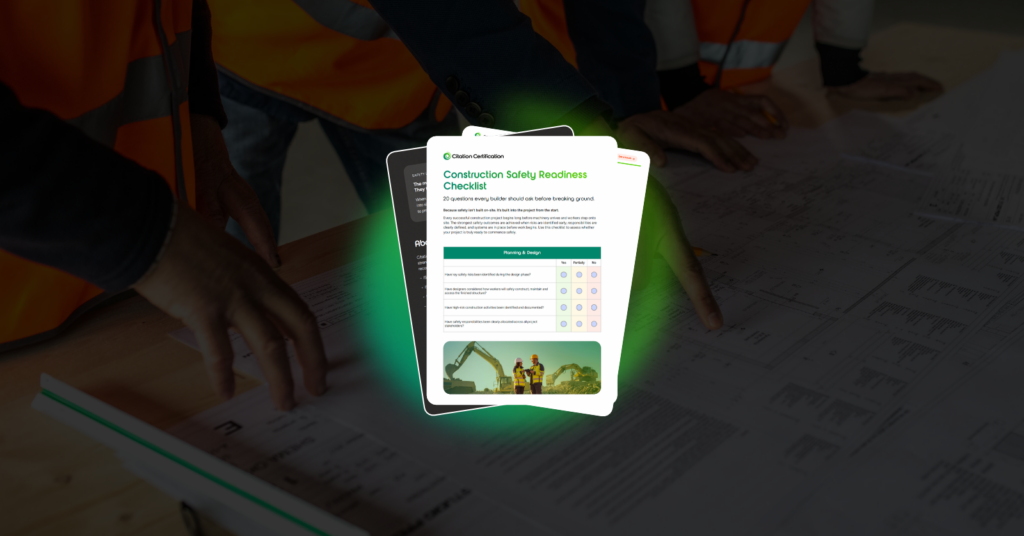
Safety isn’t built on site. It’s built into the project from the start — in...


Have your employees started submitting leave requests for December? Do your bar staff want to...
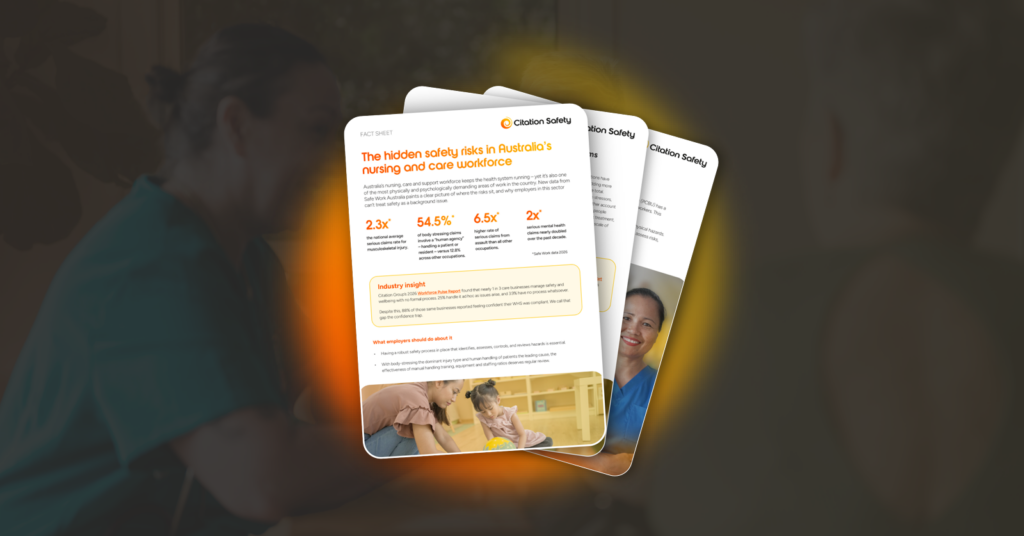

Nursing and care workers keep Australia’s health system running, and the work asks a lot...

Labour shortages. Multiple contractors and subcontractors. Tight deadlines. Client expectations. Compliance obligations across several sites...
ISO 27001 compliance means your organisation has implemented an Information Security Management System (ISMS) that meets the requirements of ISO/IEC 27001:2022. A compliant ISMS includes a documented risk assessment, a risk treatment plan, implemented security controls across organisational, people, physical, and technological categories, and an ongoing program of internal audit and management review.
ISO 27001 isn’t directly mandated by Australian law, but it directly supports compliance with the Privacy Act 1988, the Notifiable Data Breaches scheme, and the Australian Privacy Principles. It’s also referenced or expected in many government procurement frameworks and enterprise supply chain requirements.
Achieving ISO 27001 certification is widely regarded as the strongest way to demonstrate that your information security practices meet a recognised international standard.
ISO 27001 compliance means your ISMS meets the standard’s requirements. But this can be self-assessed and carries no external credibility. ISO 27001 certification means your ISMS has been independently assessed and verified by a JAS-ANZ accredited ISO 27001 certification body, and an internationally recognised certificate has been issued. Certification is the only form of ISO 27001 assurance that can be independently verified by clients, regulators, or procurement panels.
The certification audit involves two stages. The Stage one audit reviews your documentation and assesses whether your ISMS design is ready for a full assessment. The Stage two certification audit assesses whether your ISMS is operating effectively in practice. After certification, annual surveillance audits confirm ongoing compliance, and a recertification audit takes place every three years to renew your certificate.
The time required depends on the size and complexity of your organisation, the current maturity of your security practices, and the scope of your ISMS. For many businesses, the process from initial gap analysis to certificate issue takes between six and twelve months. Working with an accredited ISO 27001 certification body helps you move through the process efficiently and avoid common ISO 27001 implementation pitfalls.
Yes. The Privacy Act 1988 requires most Australian private sector organisations to take reasonable steps to protect personal information from misuse, interference, loss, and unauthorised access or disclosure. ISO 27001 provides a structured, defensible framework for meeting those obligations. It’s widely recognised as one of the strongest ways to demonstrate that your security measures are reasonable and proportionate.
The Notifiable Data Breaches (NDB) scheme, introduced under the Privacy Act, requires organisations to notify the Office of the Australian Information Commissioner (OAIC) and affected individuals when a data breach is likely to result in serious harm. ISO 27001 directly supports your NDB obligations by requiring documented security incident management procedures covering detection, response, and notification. It also provides a proactive risk management framework that reduces the likelihood of a notifiable breach occurring.
ISO 27001 certification isn’t universally mandated, but it’s increasingly expected when working with federal or state government agencies. Government frameworks including the Australian Government Information Security Manual (ISM) reference risk management practices consistent with ISO 27001, and many agencies now treat certification as a baseline assessment criterion for suppliers handling sensitive data.
The main factors are your organisation’s size, number of locations, and the complexity of your ISMS. These determine the duration of your certification audit, which is the primary factor used to calculate costs. It’s also important to consider the full three-year certification cycle, including surveillance audits, rather than focusing solely on the initial audit. Visit our ISO 27001 certification pricing page or get in touch for more information.