







 HR & Safety Software
  ISO Training Academy
  foundU Client Login

Loved working with the auditors for our ISO Accreditation. They provided me with valuable feedback and observations that will certainly enhance the business. I felt very well supported during this process as it was my first audit experience.


An ISO 14001 certification body is an independent, third-party organisation accredited to assess your environmental management system (EMS) against the requirements of ISO 14001:2015. Think of it as the independent verifier. It’s the entity that confirms your systems meet the global standard, and that your certificate means something in the real world.
Where an internal team or consultant helps you build and prepare your EMS, an ISO 14001 certification company independently verifies that it works in practice. That independence is what makes the certificate credible. It’s also what gives it commercial value with government bodies, supply chain partners, and stakeholders who expect necessary controls to be in place.

JAS-ANZ accreditation is the difference between a certificate that opens doors and one that gets questioned. JAS-ANZ is the government-appointed body responsible for accrediting ISO certification bodies in Australia and New Zealand. Through the International Accreditation Forum (IAF) Multilateral Recognition Arrangement, accredited certificates are recognised in over 90 countries.
Here’s what that means in practice for ISO 14001 certified companies:
| Criteria | Accredited certification | Non-accredited certification |
|---|---|---|
| Government tenders accepted | ✓ Yes | ✗ Not guaranteed |
| Enterprise supply chain approval | ✓ Yes | ✗ Often rejected |
| International recognition | ✓ 90+ countries | ✗ No |
| Regulatory compliance satisfied | ✓ Yes | ✗ May not satisfy |
| Auditor independently assessed | ✓ Yes | ✗ No |
| Certificate commercially useful | ✓ Full value | ✗ Limited value |
Get ISO 14001 certification right and you’ll feel the impact across your entire operation, not just on tender submissions.





Not all ISO 14001 certification companies approach the work the same way. Once you’ve confirmed accreditation, there are a few more things worth checking before you commit.






When you work with Citation Group, you get more than a certificate. Here’s what that looks like in practice.
Loved working with the auditors for our ISO Accreditation. They provided me with valuable feedback and observations that will certainly enhance the business. I felt very well supported during this process as it was my first audit experience.

Thank you for working with us to obtain ISO 45001 Certification. The process was thorough, structured and efficient and the system enhancements we have made to achieve certification will benefit our company greatly.
The breadth of experience and technical expertise you brought to the process was invaluable and really appreciated by all the senior leadership team involved.

The collaborative relationship we’ve developed with Citation Certification has turned into a true partnership where our business needs are holistically understood and supported.
The auditor that was assigned to us was fantastic. He explained what was expected and required before the audit commenced. And even during the audit process, when things were being identified or uncovered, we could work quite dynamically. He was really accommodating and professional, and really quite pragmatic in the recommendations for improvement, which we’ve taken on board.

Our most recent audit cycle was one of the most positive experiences we’ve had since certifying to ISO/IEC 27001:2022, and the relaxed nature allowed us to engage in discourse that was open and honest about gaps and our plans to fix them.

Brittany Byrne recognised as a finalist in the Mentor of the Year category.
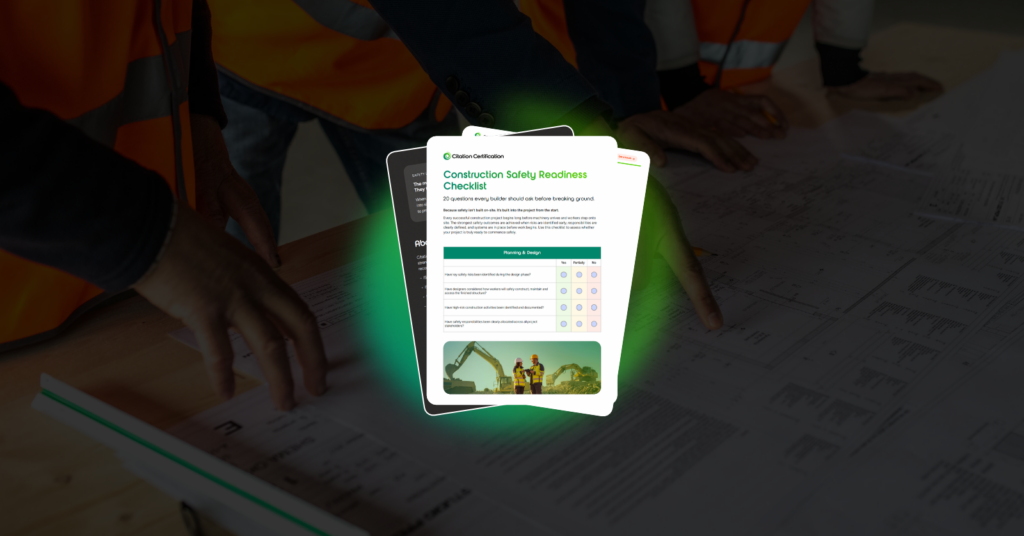
Safety isn’t built on site. It’s built into the project from the start — in...


Have your employees started submitting leave requests for December? Do your bar staff want to...
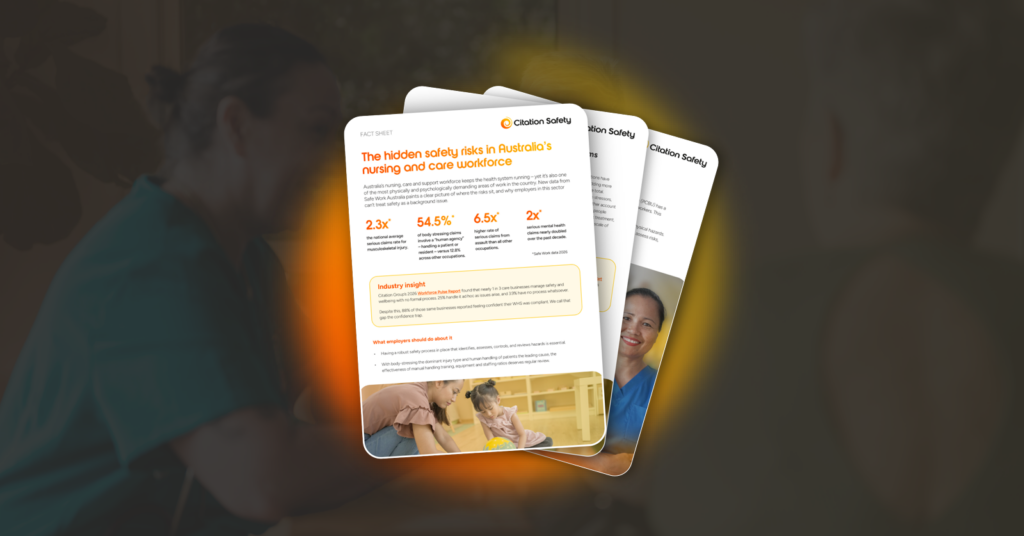

Nursing and care workers keep Australia’s health system running, and the work asks a lot...

Labour shortages. Multiple contractors and subcontractors. Tight deadlines. Client expectations. Compliance obligations across several sites...
A JAS-ANZ accredited ISO 14001 certification body is an independent organisation that has been assessed and authorised by JAS-ANZ – the Joint Accreditation System of Australia and New Zealand – to audit environmental management systems and issue certification. Accreditation confirms the body meets international standards for competence, impartiality, and audit quality.
Certificates issued by JAS-ANZ accredited bodies are recognised in over 90 countries through the International Accreditation Forum (IAF) Multilateral Recognition Arrangement. You can verify any certification body’s current accreditation status via the IAF CertSearch tool.
ISO 14001 certification is not legally mandatory in Australia. There’s no legislative requirement to certify. However, it’s increasingly required by government tender panels, enterprise supply chains, and ESG reporting frameworks as a condition of doing business. Accredited certification helps your business demonstrate environmental responsibility, satisfy legal requirements set by clients and procurement bodies, and maintain ISO 14001 compliance as environmental regulations tighten.
The ISO 14001 certification process involves four key stages: a gap analysis, a stage one audit, a stage two audit, and ongoing surveillance. The gap analysis assesses your current EMS against the requirements of ISO 14001:2015. Stage one evaluates your documentation, environmental policy, objectives, and the controls you’ve established. Stage two verifies that you’ve effectively implemented these across your operations. ISO 14001 certification is valid for three years, with annual surveillance audits to verify ongoing ISO 14001 compliance and continual improvement. A full recertification audit is conducted at the end of year three.
Yes. ISO 14001 can be integrated with ISO 9001, ISO 45001, and other management systems. ISO 14001:2015 and ISO 9001:2015 share the Annex SL framework, which is designed to make integration straightforward. Combining the two reduces audit duplication, supports ISO 14001 compliance alongside quality management, and delivers real cost savings compared to running separate systems. Many ISO 14001 certified companies choose integration because it streamlines compliance across environmental, quality, and safety management in a single, unified approach.
ISO 14001 certification typically takes between three and twelve months, depending on the maturity of your existing EMS. Businesses with documented processes and a clearly defined EMS scope can typically reach certification in three to six months. Organisations building an EMS from scratch generally need six to twelve months for ISO 14001 implementation before the formal audit begins.
ISO 14001:2026 was published on 15 April 2026 and introduced three significant changes: stronger requirements around climate change, enhanced stakeholder reporting, and deeper life cycle thinking across the standard. A three-year transition period follows publication, giving your business time to align your EMS with the updated requirements.
The ISO 14001 certification companies best placed to support you through the transition will be those already working closely with clients on their EMS.
Accreditation matters because it determines whether your ISO 14001 certificate will be recognised by government tender panels, supply chain partners, and international customers. In Australia, only JAS-ANZ accredited ISO 14001 certification bodies are independently assessed for competence and impartiality.
A certificate from a non-accredited ISO 14001 certification company may not satisfy government procurement requirements, enterprise supply chain criteria, or regulatory obligations, limiting its commercial value. JAS-ANZ accredited certification is the only type that carries full weight across government, enterprise, and international contexts.
Accreditation has practical consequences across four areas. For government tenders, most federal, state, and local procurement processes require certification from a JAS-ANZ accredited body. A non-accredited certificate may be rejected outright. For supply chains, major corporations increasingly require accredited certification from their suppliers as part of environmental compliance criteria.
For ESG reporting, investors and enterprise clients treat accredited certification as evidence of genuine environmental commitment. For regulatory compliance, industries including construction and manufacturing often require accredited certification as part of their compliance framework.