







 HR & Safety Software
  ISO Training Academy
  foundU Client Login

Loved working with the auditors for our ISO Accreditation. They provided me with valuable feedback and observations that will certainly enhance the business. I felt very well supported during this process as it was my first audit experience.


An ISO 14001 audit is an independent assessment of your EMS conducted by an accredited certification body. It verifies that your organisation has implemented the processes, controls, and environmental commitments required by ISO 14001:2015. It also confirms that these measures are working effectively in practice.
ISO 14001 audits assess your environmental policy and how you identify and manage significant environmental aspects and impacts. They also evaluate whether you are meeting your legal and other compliance obligations, and whether genuine continual improvement is taking place.
The ISO 14001 audit process is more straightforward than many businesses expect. Here’s what happens at every stage, from initial documentation review through to recertification.






Over 3,500 Australian businesses trust Citation Group to achieve and maintain ISO certification. Here’s what you get:
Loved working with the auditors for our ISO Accreditation. They provided me with valuable feedback and observations that will certainly enhance the business. I felt very well supported during this process as it was my first audit experience.

Thank you for working with us to obtain ISO 45001 Certification. The process was thorough, structured and efficient and the system enhancements we have made to achieve certification will benefit our company greatly.
The breadth of experience and technical expertise you brought to the process was invaluable and really appreciated by all the senior leadership team involved.

The collaborative relationship we’ve developed with Citation Certification has turned into a true partnership where our business needs are holistically understood and supported.

The auditor that was assigned to us was fantastic. He explained what was expected and required before the audit commenced. And even during the audit process, when things were being identified or uncovered, we could work quite dynamically. He was really accommodating and professional, and really quite pragmatic in the recommendations for improvement, which we’ve taken on board.

Our most recent audit cycle was one of the most positive experiences we’ve had since certifying to ISO/IEC 27001:2022, and the relaxed nature allowed us to engage in discourse that was open and honest about gaps and our plans to fix them.

Brittany Byrne recognised as a finalist in the Mentor of the Year category.
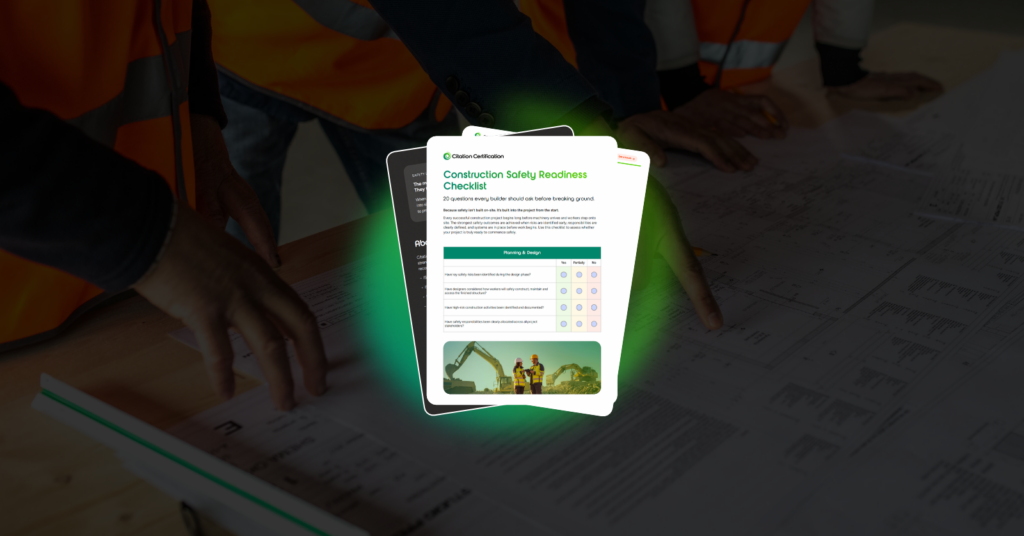
Safety isn’t built on site. It’s built into the project from the start — in...


Have your employees started submitting leave requests for December? Do your bar staff want to...
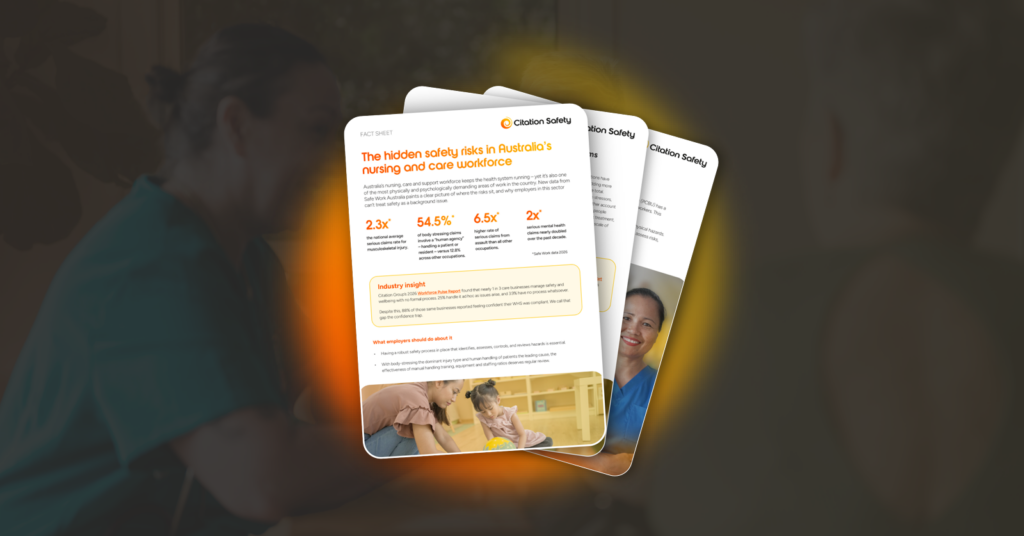

Nursing and care workers keep Australia’s health system running, and the work asks a lot...

Labour shortages. Multiple contractors and subcontractors. Tight deadlines. Client expectations. Compliance obligations across several sites...
An ISO 14001 audit is an independent assessment of your environmental management system (EMS) to verify it meets the requirements of ISO 14001:2015. It evaluates your environmental policy, significant environmental aspects and impacts, compliance obligations, and whether genuine continual improvement is taking place.
ISO 14001 audits fall into four main types:
Each serves a distinct purpose in the environmental management system lifecycle.
The ISO 14001 certification audit process involves an initial two-stage audit: Stage one is a documentation review, and Stage two is an on-site assessment of your EMS in practice. After Stage two, if nonconformities are identified, organisations typically have up to three months to take corrective action before certification is issued.
Certification is then maintained through annual surveillance audits in years one and two, and a full recertification audit every three years. ISO 14001 certification is not a one-time event. It requires a proactive approach and ongoing commitment to continual improvement across the entire three-year certification cycle.
An internal audit is a self-conducted review of your EMS, run by your own team or a contracted internal auditor, to assess whether your system is working as intended. Internal ISO 14001 audits are a mandatory requirement of ISO 14001:2015 and should be conducted at planned intervals as part of your internal audit program.
An external audit is conducted by an independent accredited ISO 14001 certification body like Citation Group. External audits determine whether your organisation achieves, maintains, or renews ISO 14001 certification. Both work together, and internal audits keep your EMS honest between external assessments.
ISO 14001 is focused on environmental management. It helps you identify and control your environmental issues and impacts, meet compliance obligations, and drive continual improvement in environmental performance. It shares the same Annex SL structure as other ISO management systems, including ISO 9001 (quality management system) and ISO 45001 (occupational health and safety), so the standards are designed to integrate.
The key difference is scope. When you audit ISO 14001 requirements, the assessment centres on environmental aspects, environmental policy, and legal obligations relating to the environment. If your business operates in sectors with significant environmental responsibilities, like construction, manufacturing, energy, or agriculture, then ISO 14001 is typically the priority.
An optional pre-assessment (or gap analysis) is a preliminary review of your EMS against ISO 14001 requirements before your formal Stage one audit. It’s not mandatory, but organisations that complete a gap analysis ahead of Stage one typically move through the certification process more efficiently. It allows them to surface any gaps while there’s still time to address them.
ISO 14001:2026 is an updated version of the standard that adds new requirements around climate change considerations, biodiversity, lifecycle thinking, and supplier oversight. The core structure of ISO 14001:2015 is retained, so you won’t need to rebuild your EMS from scratch.
Organisations certified to ISO 14001:2015 have until May 2029 to transition. Certification bodies are expected to begin issuing ISO 14001:2026 certificates throughout 2026 and into 2027. If you’re preparing for certification now, speak to Citation Group about the most appropriate pathway.