







 HR & Safety Software
  ISO Training Academy
  foundU Client Login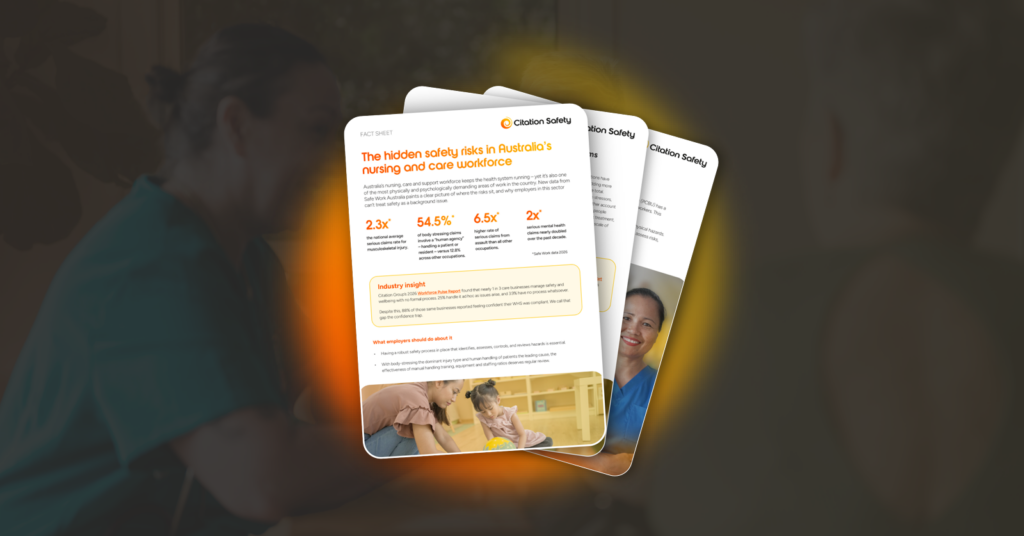

Guides
The hidden safety risks in Australia’s nursing and care workforce
Nursing and care workers keep Australia’s health system running, and the work asks a lot...
7 October, 2026
 Blogs
12 August, 2026
Blogs
12 August, 2026

Riley Gall started as a casual delivery driver at a Queensland Domino’s franchise in 2015, when he was still at school. Rather than suing his employer under the Fair Work Act, he took a different, untested legal path: he sued the franchisor, Domino’s Pizza Enterprises Limited, under section 18 of the Australian Consumer Law, arguing Domino’s had misled its franchisees about which pay rates applied, and that this flowed down to him as direct financial loss. The Federal Court handed down its decision in Gall v Domino’s Pizza Enterprises Limited (No 4) [2026] FCA 967 on 22 July 2026.
The Court agreed. It found that Domino’s training materials, payroll systems and audit program all pointed franchisees toward the wrong industrial instrument. The correct instrument, the Fast Food Industry Award, was more generous on casual loading, weekend and public holiday penalties, and allowances than the enterprise agreement Domino’s had told franchisees to use.
Domino’s genuinely believed the enterprise agreements applied and had operated that way for over a decade without challenge. None of that mattered. Under consumer law, a statement can be entirely honest and still be misleading. The Court noted that a differently worded, opinion-based statement grounded in advice may well have produced a different outcome.
Mr Gall’s own loss was assessed at $11,869.33 plus interest. That figure settles his claim, but it doesn’t resolve the position of the broader class or quantify losses across the network. Those questions will play out in further hearings. Domino’s has confirmed it’s reviewing the judgment, including possible grounds of appeal.
What this means for your business
Centralised systems (shared payroll platforms, network-wide training, compliance support) remain genuinely valuable. This case doesn’t change that logic. It raises the standard those systems need to meet. Before a regulator, employee or class action lawyer tests your position for you, it’s worth asking:
• Is your pay guidance independently verified, or simply accepted as given?
• Can individual locations reconfigure pay rules without central oversight?
• Could you show a regulator, today, the reasonable steps you’ve taken to prevent underpayment?
Legal exposure doesn’t only sit with individual employers. It can sit with the guidance a business gives, however well-intentioned. Citation Legal helps franchisors and multi-site businesses pressure-test exactly this kind of exposure, reviewing pay guidance against current legislation and advising on Fair Work Act and Australian Consumer Law risk. If you’d like to talk through your own network’s exposure, get in touch. We’re happy to help.
Authored by: Zoe McQuillan, Special Counsel
Nursing and care workers keep Australia’s health system running, and the work asks a lot...

Labour shortages. Multiple contractors and subcontractors. Tight deadlines. Client expectations. Compliance obligations across several sites...


Structured onboarding, a deliberate first 90 days rather than a pile of paperwork, is one...


“What we often see is businesses feel confident because they have HR policies or an...