






 HR & Safety Software
  ISO Training Academy
  foundU Client Login

Blogs
Brittany Byrne and Lisa Qiu selected for Elite Women 2026
Brittany and Lisa recognised by Australasian Lawyer and NZ Lawyer as Elite Women in 2026.
22 October, 2026
 Blogs
7 September, 2026
Blogs
7 September, 2026

A dispute at Qantas has put safety back in the spotlight.
Around 600 Qantas Ground Services workers have voted overwhelmingly in favour of protected industrial action during bargaining for an enterprise agreement, significantly impacting airport operations.
At the same time, the Transport Workers’ Union Health and Safety Representatives (HSRs) have raised a series of safety concerns in Provisional Improvement Notices (PINs), concerning workplace safety and psychosocial hazards related to an asserted loss of job security and pay structures at related entities. Qantas disputes elements of this characterisation, and the parties remain in negotiation for an enterprise agreement.
A Health and Safety Representative (HSR) is a worker elected by their peers to represent employee interests in health and safety matters at the workplace.
HSRs have the right to inspect the workplace, investigate potential hazards, make representations to management, and request the involvement of regulatory authorities where they believe a serious health and safety risk exists. Employers must give HSRs reasonable time and paid leave to perform their functions and must not disadvantage them for acting in that role. HSRs are a mechanism for embedding worker participation in safety management, particularly in workplaces with 20 or more employees where an HSR must be elected if workers request one.
A Provisional Improvement Notice (PIN) can be issued by any trained Health and Safety Representative (HSR) to the person conducting a business or undertaking (PCBU) where they have reasonable grounds to believe a health and safety risk exists in the workplace.
Once issued, the PIN notifies the PCBU of the alleged risk and typically allows 14 days for them to respond or take corrective action before the HSR may escalate the matter to the regulator. This power gives HSRs a formal enforcement mechanism to compel management attention to safety concerns without immediately involving external authorities, encouraging workplace-level resolution while preserving the HSR’s right to escalate to SafeWork NSW or WorkSafe Victoria if the risk isn’t addressed. The PIN sits as an intermediate step between informal representation and regulatory involvement, making it a significant tool in the HSR’s compliance toolkit.
While experienced observers may view the usage of PINs by HSRs during bargaining as an industrial tactic, it’s no less significant for having been raised at that time.
If a PIN can land on a business regardless of what’s actually motivating it, the only real protection is being able to answer for the business’s systems on the day it arrives. That means having current risk assessments for the hazards in the workplace, documented control measures, and evidence that they’re actually being followed – not a folder of policies nobody’s looked at since they were written.
So the question worth asking now: when did you last conduct a WHS Audit? When were risk assessments and control measures last reviewed, and could they be produced today if someone asked?
This isn’t hypothetical. In November 2024, a Queensland court fined a state government agency $425,000 after a worker died deploying equipment during an operational task. The agency had known about training deficiencies related to that task for 10 years. Multiple near-miss reports had been filed over that decade, flagging the same gap. None of it led to the risks being eliminated or addressed via control measures.
The same principle extends to psychosocial hazards, which businesses are now expected to manage with the same rigour as physical risks under the WHS codes of practice. Citation’s own research shows the gap this creates: in manufacturing, logistics and industrial businesses, 94.5 per cent of employers felt confident they were meeting their health and safety obligations, yet only 72.2 per cent felt sure they could manage psychosocial risk, and 25.5 per cent had no formal safety processes in place at all. Confidence and compliance aren’t the same thing, and the businesses most at risk are often the ones that feel most assured.
Navigating workplace safety is a lot to manage on top of running a business. Citation Safety gives businesses the tools, advice and support to build genuine, demonstrable safety practices – not just paperwork that looks good until an inspector arrives.
From WHS audits and gap assessments through to our digital WHS Software platform and around-the-clock Safety Advice Line, we can help businesses identify where they stand against The Code of Practice.
If your business operates in a high-risk sector, or you’re simply not sure where the gaps are, get in touch with our team for a confidential conversation about what needs to happen next
Brittany and Lisa recognised by Australasian Lawyer and NZ Lawyer as Elite Women in 2026.

Every business ends the year with a couple of loose ends – the performance issue...

Brittany Byrne recognised as a finalist in the Mentor of the Year category.
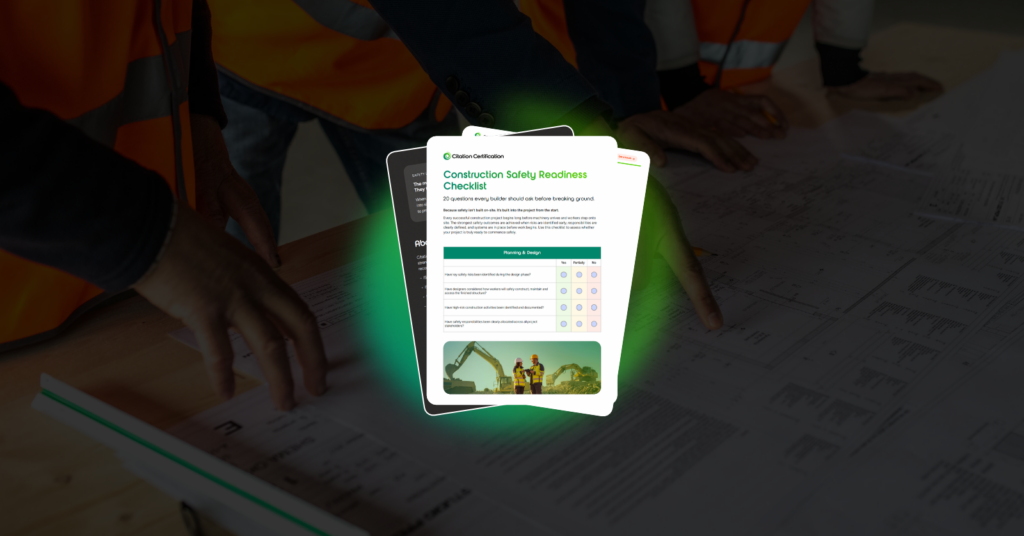

Safety isn’t built on site. It’s built into the project from the start — in...


Have your employees started submitting leave requests for December? Do your bar staff want to...