








 HR & Safety Software
  ISO Training Academy
  foundU Client Login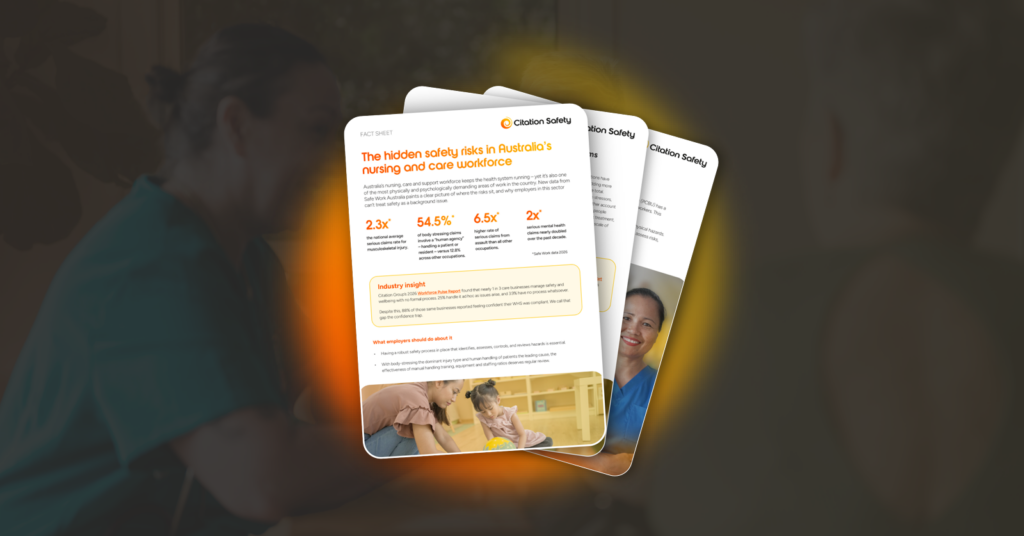

Guides
The hidden safety risks in Australia’s nursing and care workforce
Nursing and care workers keep Australia’s health system running, and the work asks a lot...
7 October, 2026
 Blogs
12 August, 2026
Blogs
12 August, 2026

Update: As of 11 August 2026, this legislation has been delayed until 1 July 2027. The postponement follows concerns from Victorian business groups over cost and implementation timeframes, and new Premier Ben Carroll’s efforts to reset relations with the business community – though the government maintains the laws will still pass before the November state election. The article below has been edited to reflect these changes.
Victoria is on the verge of a significant shift in workplace legislation. In this article, we break down what’s been proposed, what it means for employers, and the practical steps organisations can take now – before any law is passed – to make sure they’re ready.
The Victorian Government has announced its intention to give eligible employees a legal right to work from home two days per week. If passed, the legislation would represent a world-first workplace entitlement – and one that carries real implications for how Victorian businesses manage their people.
Legislation was introduced to Parliament in June 2026. If it passes, the right would commence on 1 July 2027.
The proposal has political dimensions – it faces opposition, and its passage through Parliament isn’t guaranteed, as shown by the recent delay to allow further consultation with business. But employers would be wise not to wait on the outcome before taking stock of their current position.
This initiative operates solely within Victoria and is distinct from the federal Fair Work Act. It also provides a far broader entitlement than the existing Fair Work Act right to request flexible working arrangements.
Under the announcement, Victorians who can work from home would have the right to do so two days per week. The right would apply regardless of workplace size, and it would be enshrined in the Equal Opportunity Act – giving it considerably more weight than a contractual or policy-based entitlement.
The proposed dispute resolution pathway is formal and structured. Unresolved disputes would go first to the Victorian Equal Opportunity and Human Rights Commission (VEOHRC) for conciliation. If conciliation fails, matters would proceed to the Victorian Civil and Administrative Tribunal (VCAT). This is an enforceable mechanism with real consequences for organisations that can’t demonstrate they’ve handled requests fairly and consistently.
More than a third of workers already work from home regularly, including 60 per cent of professionals. The Government points to workforce participation being 4.4 per cent higher than pre-pandemic levels as evidence that flexible work has brought more people – particularly parents and carers – into employment. The proposed law isn’t attempting to introduce a new norm; it’s seeking to protect one that’s already well embedded in many workplaces.
That context is useful for employers thinking about how to position themselves ahead of any legislative outcome. Organisations that have already built genuine, well-considered flexible work frameworks are in a strong position. Employers who haven’t should use this moment as a prompt to act – regardless of whether the law ultimately passes.
There are four areas worth addressing in the months ahead.
Whether or not this legislation passes in its current form, the direction of travel is clear. Flexible work is increasingly a baseline expectation for employees, not a perk. Organisations that build the right frameworks now won’t just be better placed for compliance – they’ll be stronger on attraction, retention, and employee trust.
Citation HR helps businesses develop compliant, practical HR policies and supports managers to apply them consistently. If Victoria’s proposed work-from-home legislation raises questions for your organisation, our team is ready to help. We’re offering complimentary workplace compliance consultations to ensure your business is up to date with current legislation and prepared for future changes. Request a call today.
Nursing and care workers keep Australia’s health system running, and the work asks a lot...

Labour shortages. Multiple contractors and subcontractors. Tight deadlines. Client expectations. Compliance obligations across several sites...

Structured onboarding, a deliberate first 90 days rather than a pile of paperwork, is one...


“What we often see is businesses feel confident because they have HR policies or an...