








 HR & Safety Software
  ISO Training Academy
  foundU Client Login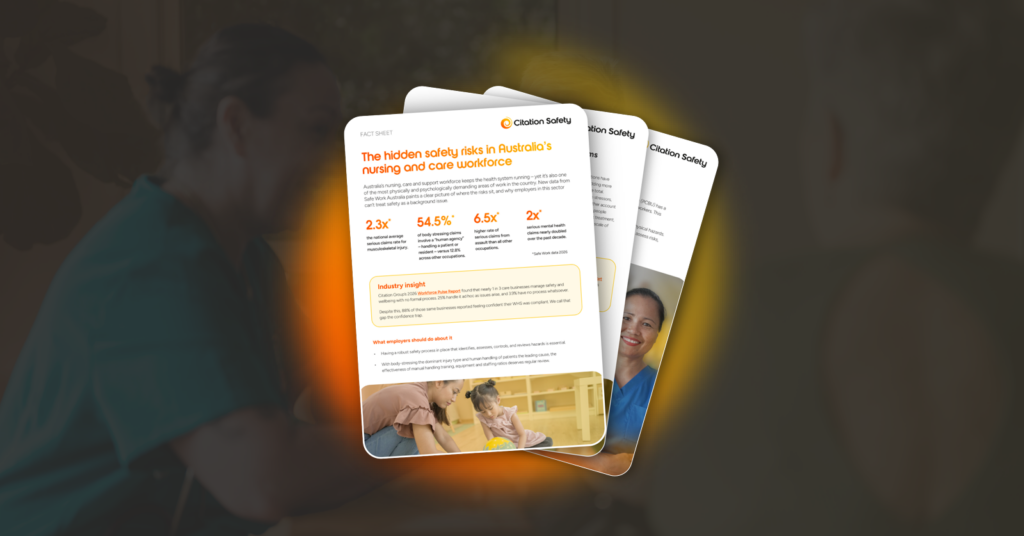

Guides
The hidden safety risks in Australia’s nursing and care workforce
Nursing and care workers keep Australia’s health system running, and the work asks a lot...
7 October, 2026
 Blogs
12 August, 2026
Blogs
12 August, 2026

A business can have a valid reason and still lose a claim if the process wasn’t right.
Unfair dismissal is now the most common type of claim lodged with the Fair Work Commission, and Australian employees are increasingly using AI tools to build them.
In February 2026, Fair Work Commission President Justice Adam Hatcher revealed he’d personally tested how easily ChatGPT could generate an unfair dismissal claim. He gave it a few basic facts about a hypothetical dismissal and had a ready-to-file application and witness statement in under ten minutes.
That doesn’t mean every AI-generated claim has merit. Some are built on inflated compensation estimates and invented details, and Hatcher has flagged this as a real problem for the Commission.
Since then, the Commission has seen cases involving AI-generated submissions that cited case law or contract terms that simply didn’t exist, prompting it to draft new guidance on how AI can be used in proceedings.
But it does mean the barrier to lodging a claim has dropped. Businesses are more likely than ever to be tested on how they handled a termination.
So what actually determines whether a dismissal is fair, and where does the real risk sit?
Under section 387 of the Fair Work Act, the Commission looks at whether a dismissal was harsh, unjust or unreasonable. In practice, that comes down to two things: was there a valid reason connected to the employee’s conduct or capacity, and was the process followed to get there fair?
A business can have every reason in the world to let someone go and still lose a claim if the process – the warning, the opportunity to respond, the documentation – wasn’t there.
The Commission also weighs matters like whether the employee was unreasonably refused a support person, and the practical realities of the employer’s size and HR resources.
Here’s what trips businesses up: even a decision with solid grounds can be undone by a flawed process. It’s about whether you can show your working.
If you employ fewer than 15 people, the Fair Work Ombudsman’s Small Business Fair Dismissal Code is designed to give you a clear, defensible pathway.
Broadly, it requires a valid reason and – unless the employer reasonably believes the conduct amounts to serious misconduct justifying immediate dismissal – a warning that the employee’s job is at risk and a genuine opportunity to fix the problem before dismissal.
Following the Code properly is one of the strongest protections available to a small business, but it only holds up if you can actually demonstrate you followed it.
Even when a claim doesn’t succeed, defending it – responding formally, attending conciliation, gathering evidence – still costs a business real time and money. Winning isn’t the same as avoiding the cost.
The businesses that come through a dismissal challenge cleanly tend to have one thing in common: a paper trail.
That generally spans three things – records of performance or conduct conversations as they happened, written warnings that set out what needed to change, and a clear account of the reasoning behind the final decision.
Verbal conversations and good intentions don’t hold up on their own, and reconstructing this after the fact rarely looks credible to the Commission.
Knowing the test is one thing. Building a termination process that actually stands up when it’s tested is another – and that’s exactly the practical framework we cover in our upcoming webinar.
Termination without tears Wednesday, 2 September, 11am AEST
A practical, legally grounded framework for handling termination the right way – including the FWC’s fairness test in full, how to avoid the small business trap, and what a defensible process looks like from decision to final pay.
Nursing and care workers keep Australia’s health system running, and the work asks a lot...

Labour shortages. Multiple contractors and subcontractors. Tight deadlines. Client expectations. Compliance obligations across several sites...

Structured onboarding, a deliberate first 90 days rather than a pile of paperwork, is one...


“What we often see is businesses feel confident because they have HR policies or an...