







 HR & Safety Software
  ISO Training Academy
  foundU Client Login

Blogs
Brittany Byrne and Lisa Qiu selected for Elite Women 2026
Brittany and Lisa recognised by Australasian Lawyer and NZ Lawyer as Elite Women in 2026.
22 October, 2026
 Blogs
10 July, 2026
Blogs
10 July, 2026

The departure of Karl Stefanovic from Channel Nine is one of the most high-profile employment separations Australia has seen in years. After 26 years at the network, Nine confirmed on 26 June 2026 that Stefanovic would leave “effective immediately” following an interview with a controversial public figure on Stefanovic’s independent podcast.
Strip away the celebrity, the multimillion-dollar contract and the cameras, and what’s left is a set of employment questions that Australian businesses of all sizes face regularly:
These aren’t easy questions. But the Stefanovic case offers a useful lens through which employers can examine their own position.
Stefanovic had been running an independent podcast, The Karl Stefanovic Show, since January 2026 – a venture explicitly separate from Nine. The network had no involvement in guest selection or editorial decisions.
When Stefanovic interviewed British far-right figure Tommy Robinson, however, Nine’s position that the podcast was entirely separate became difficult to maintain.
Stefanovic was one of Australia’s most recognisable faces, appearing on Nine’s flagship breakfast program every morning. The association was unavoidable.
Reports indicated Stefanovic’s contract included provisions against bringing the network into disrepute. Nine described the situation as irreconcilable, with the network’s statement framing the core issue clearly: it was no longer possible for Stefanovic to host Today while also running his independent podcast. The separation was immediate.
This case highlights a tension that’s becoming more common as side projects, social media and independent content creation blur the boundary between an employee’s professional and personal identity.
Employers have a legitimate interest in protecting their reputation. At the same time, employees have rights – including the right to engage in lawful activity outside of work. Australian employment law doesn’t give employers a blanket right to control what employees do in their own time. What it does allow, when properly documented, is the ability to act where outside conduct causes genuine harm to the business.
The critical word there is “documented”. Contracts that include clear, specific conduct clauses – covering secondary employment, reputational obligations, conflict of interest and behaviour in public-facing roles – give employers a defensible basis for action.
Contracts that don’t include these provisions leave businesses exposed when situations arise, and they will.
It’s also worth noting that “bringing the employer into disrepute” clauses, while common, need to be drafted carefully. Courts and tribunals have scrutinised cases where employers have sought to rely on vague or overly broad conduct provisions.
The more specific the clause, and the more clearly it’s been communicated to the employee, the stronger the employer’s position.
The rise of the side hustle means employers can no longer assume that what an employee does in their own time stays neatly separate.
For roles where the employee is closely identified with the brand – whether that’s a television presenter, a senior executive or a customer-facing manager – the reputational spillover can be significant.
Employers don’t need to prohibit secondary employment outright. What they do need is a clear policy that requires disclosure, sets out the circumstances in which secondary work may be declined or restricted, and establishes what happens when a conflict arises.
Without that framework, employers are left making ad hoc decisions under pressure – exactly the kind of environment where costly mistakes happen.
Even where an employer has strong grounds for action, the process matters. Reports indicate Nine held internal crisis talks before reaching its decision, and the parting was described publicly as a mutual agreement.
Whatever the private reality, the public framing reflects an awareness that even high-profile terminations carry legal and reputational risk if they’re not handled carefully.
For most employers, the obligations are straightforward: ensure the employee understands the concerns, give them the opportunity to respond, and reach a decision that’s proportionate to the conduct. Skipping these steps – even when the conduct is clear-cut – creates unfair dismissal exposure and, in senior or high-profile cases, significant reputational risk of a different kind.
The Stefanovic case won’t be the last time an employee’s independent activities create problems for their employer. The practical takeaways are clear.
Employment contracts should include specific, carefully worded provisions covering secondary employment, conduct obligations and reputational harm – particularly for senior or public-facing roles. These provisions should be communicated clearly.
Organisations should have a secondary employment policy that sets out a disclosure and approval process. Employees shouldn’t be left to guess where the line is.
Where outside conduct becomes a concern, employers should act promptly but carefully. Document the issue, follow a fair process, and take advice before making decisions that could carry legal consequences.
The question of where an employee’s private life ends and an employer’s legitimate interests begin doesn’t have a universal answer. What it does have is a framework – and organisations that build that framework before an issue arises are in a far stronger position than those who try to construct it in the middle of one.
Follow best-practice processes, and seek professional advice when you’re not sure of something, and you’ll be setting yourself (and your business) up for the best possible outcome.
Citation HR can ensure you follow the above process seamlessly every time – reducing your risk with our industry-leading software containing hundreds of best practice templates, guides, and workflows to help you manage employee performance and compliance. With our 24/7 HR Advice Line, you’ll have the tools and legal assistance you need to tackle any HR issue with confidence.
Contact us today for a free, no-obligation chat about your workplace compliance.
Brittany and Lisa recognised by Australasian Lawyer and NZ Lawyer as Elite Women in 2026.

Every business ends the year with a couple of loose ends – the performance issue...

Brittany Byrne recognised as a finalist in the Mentor of the Year category.
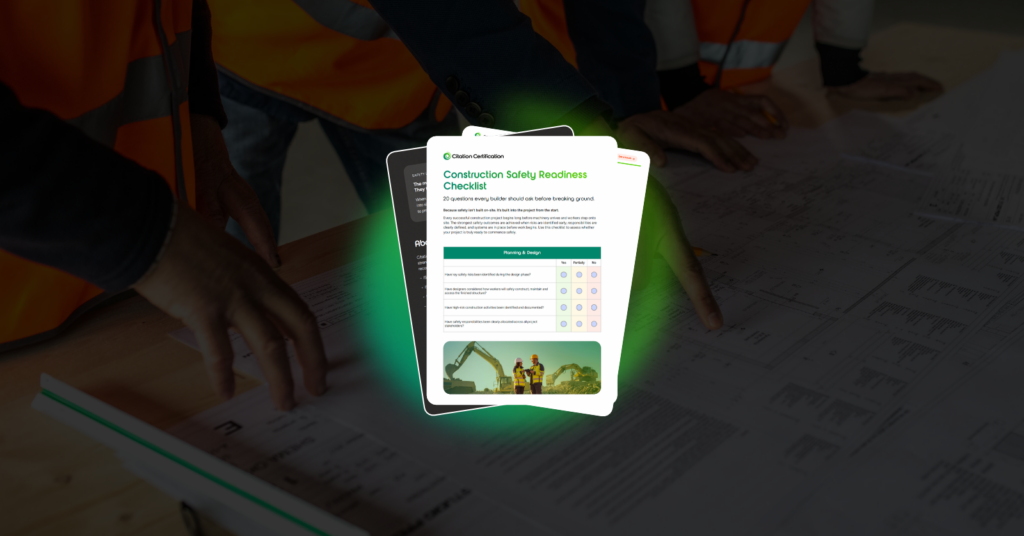

Safety isn’t built on site. It’s built into the project from the start — in...

Have your employees started submitting leave requests for December? Do your bar staff want to...